

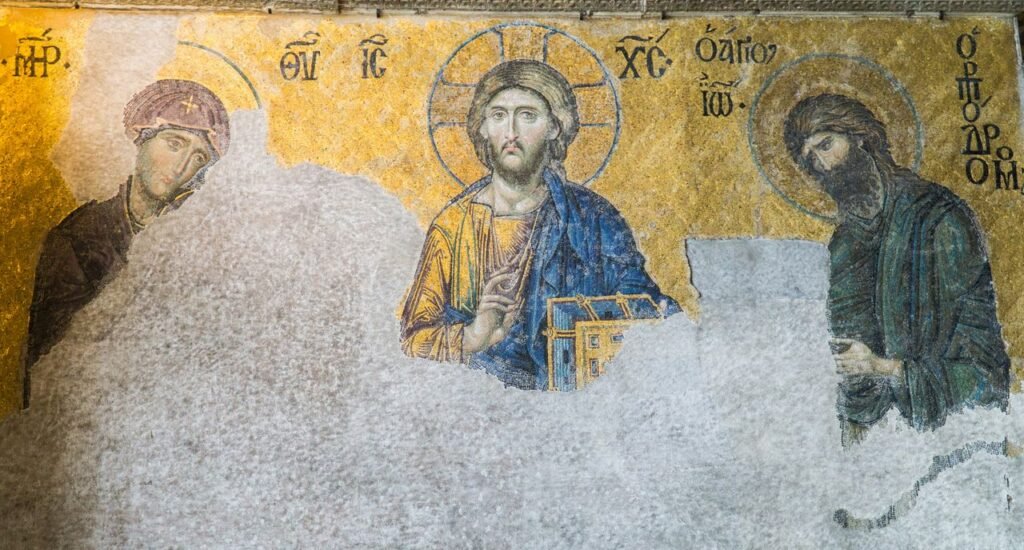
Before Jesus began His public ministry, a man appeared in the wilderness with an extraordinary message. His name was John the Baptist, and his mission was to prepare the way for the coming Messiah.
He called people to repentance, baptized those who came to him, and urged the nation of Israel to turn their hearts back to God. His message was simple but powerful: someone greater was coming, and the people needed to prepare themselves.
John the Baptist occupies a special place in the Christmas story because his birth and ministry were part of God’s preparation for the arrival of Jesus Christ.
The Old Testament prophets had spoken about a messenger who would come before the Messiah. John was identified as that messenger, the voice crying in the wilderness.
Whether you are studying the biblical story of John the Baptist, preparing for Advent, or looking for Scriptures about repentance and spiritual preparation, these 25 Bible verses will help you understand his life and mission.
Who Was John the Baptist in the Bible?
John the Baptist was a prophet chosen by God to prepare the people for the coming of Jesus Christ.
He was the son of Zechariah, a priest, and Elizabeth, a relative of Mary, the mother of Jesus.
His birth was miraculous because his parents were advanced in age and Elizabeth had been unable to have children.
An angel appeared to Zechariah and announced that Elizabeth would give birth to a son. The child would be named John and would have a special purpose: to prepare a people ready for the Lord.
John grew up in the wilderness and eventually began preaching a message of repentance and baptism.
He called people to turn away from sin, warned them against relying on religious status, and encouraged them to demonstrate genuine repentance through their actions.
His ministry pointed toward Jesus, whom he recognized as the Lamb of God.
John understood that he was not the Messiah. He was the messenger sent to prepare the way for Him.
25 Bible Verses About John the Baptist and Preparing the Way
1. Isaiah 40:3 – A Voice Crying in the Wilderness
“The voice of him that crieth in the wilderness, Prepare ye the way of the LORD, make straight in the desert a highway for our God.” (KJV)
This is one of the most important Old Testament prophecies concerning John the Baptist.
Isaiah describes a messenger who would appear in the wilderness and announce the coming of the Lord.
The imagery of preparing a road represents removing obstacles and making a way for someone important.
John fulfilled this prophetic role by calling people to repentance and preparing their hearts for Jesus.
2. Malachi 3:1 – God Will Send His Messenger
“Behold, I will send my messenger, and he shall prepare the way before me.” (KJV)
The prophet Malachi speaks of a messenger who would arrive before the Lord.
This promise becomes especially important when reading the New Testament account of John the Baptist.
Jesus refers to this prophecy in Matthew 11:10 and identifies John as the messenger who was sent ahead of Him.
It reminds us that John’s ministry was part of God’s larger plan.
3. Malachi 4:5-6 – The Coming of Elijah
“Behold, I will send you Elijah the prophet before the coming of the great and dreadful day of the LORD.” (KJV)
Malachi closes the Old Testament with a promise that Elijah would come before the great day of the Lord.
When the angel announced John’s birth, he explained that John would come in the spirit and power of Elijah.
John was not literally Elijah returned to earth. Rather, he would carry out a similar prophetic mission, calling people to repentance and restoring hearts to God.
4. Luke 1:13 – The Angel Announces John’s Birth
“Fear not, Zacharias: for thy prayer is heard; and thy wife Elisabeth shall bear thee a son, and thou shalt call his name John.” (KJV)
Zechariah and Elizabeth had spent many years without children.
One day, while Zechariah was serving in the temple, the angel Gabriel appeared and announced that Elizabeth would give birth to a son.
The announcement was unexpected, but the child’s purpose was extraordinary.
John’s birth was not simply a personal blessing for his parents. It was part of God’s preparation for the coming Messiah.
5. Luke 1:15 – John Will Be Great Before the Lord
“For he shall be great in the sight of the Lord, and shall drink neither wine nor strong drink; and he shall be filled with the Holy Ghost, even from his mother’s womb.” (KJV)
The angel describes John’s special calling before he is even born.
His greatness would not come from wealth, political influence, or earthly power.
He would be great because of his faithfulness to God’s purpose.
The verse also highlights the important role of the Holy Spirit in John’s life and ministry.
6. Luke 1:16 – He Will Turn Many Hearts Back to God
“And many of the children of Israel shall he turn to the Lord their God.” (KJV)
John’s mission would be to bring people back to God.
He would challenge the people to recognize their sins, abandon hypocrisy, and seek genuine spiritual renewal.
His preaching was not intended to attract attention to himself. It was meant to prepare people to receive the Messiah.
7. Luke 1:17 – He Will Prepare a People for the Lord
“And he shall go before him in the spirit and power of Elias, to turn the hearts of the fathers to the children, and the disobedient to the wisdom of the just; to make ready a people prepared for the Lord.” (KJV)
This verse explains John’s mission in remarkable detail.
He would come in the spirit and power of Elijah, encouraging reconciliation, repentance, and obedience.
The final phrase is especially important: John would prepare a people for the Lord.
His ministry was about preparing hearts, not simply announcing a future event.
8. Luke 1:76 – John Will Be Called the Prophet of the Highest
“And thou, child, shalt be called the prophet of the Highest: for thou shalt go before the face of the Lord to prepare his ways.” (KJV)
After John’s birth, Zechariah praises God and prophesies about his son’s future.
He recognizes that John will become a prophet who goes before the Lord.
This passage connects John’s life with the promises made through the Old Testament prophets.
It also shows that his mission was understood from the very beginning.
9. Luke 1:77 – He Will Preach the Knowledge of Salvation
“To give knowledge of salvation unto his people by the remission of their sins.” (KJV)
Zechariah explains that John will help people understand the salvation God is preparing for them.
His message of repentance would lead people to recognize their need for forgiveness.
John would prepare the way for Jesus, whose mission would bring the forgiveness of sins and reconciliation with God.
10. Matthew 3:1-2 – John Preaches Repentance
“In those days came John the Baptist, preaching in the wilderness of Judaea, And saying, Repent ye: for the kingdom of heaven is at hand.” (KJV)
John’s public ministry begins in the wilderness of Judea.
His central message is repentance.
He tells people that the kingdom of heaven is near and that they must turn away from their sinful ways.
This announcement signals that something extraordinary is about to happen. The promised Messiah is approaching, and the people must prepare their hearts.
11. Matthew 3:3 – John Fulfills Isaiah’s Prophecy
“For this is he that was spoken of by the prophet Esaias, saying, The voice of one crying in the wilderness, Prepare ye the way of the Lord, make his paths straight.” (KJV)
Matthew directly connects John’s ministry with Isaiah 40:3.
The wilderness becomes the place where God’s messenger announces the coming of the Messiah.
John’s role is similar to that of a messenger preparing the road for a king.
His message calls people to remove the spiritual obstacles that keep them from God.
12. Matthew 3:8 – Produce Fruit Worthy of Repentance
“Bring forth therefore fruits meet for repentance.” (KJV)
John challenges people who come to him for baptism.
He warns them that genuine repentance must produce visible changes in their lives.
It is not enough to say that we are sorry or claim to be religious. Our actions should reflect a sincere desire to live according to God’s will.
This remains an important lesson for Christians today.
13. Matthew 3:11 – John Announces Someone Greater
“I indeed baptize you with water unto repentance: but he that cometh after me is mightier than I, whose shoes I am not worthy to bear.” (KJV)
John openly acknowledges that someone greater is coming after him.
He baptizes people with water as a sign of repentance, but he explains that the coming Messiah will bring something far greater.
John’s humility is striking. Despite attracting large crowds, he never presents himself as the central figure.
He understands that his purpose is to point people toward Jesus.
14. Matthew 3:13-15 – Jesus Comes to Be Baptized
“Then cometh Jesus from Galilee to Jordan unto John, to be baptized of him.” (Matthew 3:13, KJV)
One of the most significant moments in John’s ministry occurs when Jesus comes to the Jordan River.
John initially hesitates because he recognizes Jesus’ greatness and feels unworthy to baptize Him.
However, Jesus explains that this must happen to fulfill all righteousness.
The baptism marks the beginning of Jesus’ public ministry and demonstrates the close connection between John’s mission and the arrival of the Messiah.
15. Mark 1:4 – John Preaches a Baptism of Repentance
“John did baptize in the wilderness, and preach the baptism of repentance for the remission of sins.” (KJV)
Mark summarizes John’s ministry with a clear description of his message.
His baptism was associated with repentance and a desire for forgiveness.
People came from different parts of Judea and Jerusalem to hear him and confess their sins.
John’s ministry prepared people spiritually for the arrival of Jesus.
16. Mark 1:7 – He Is Greater Than I
“And preached, saying, There cometh one mightier than I after me, the latchet of whose shoes I am not worthy to stoop down and unloose.” (KJV)
John understands that his own ministry is temporary.
He is preparing the way for someone whose authority and greatness far exceed his own.
His willingness to take a humble position is one of the defining characteristics of his ministry.
He does not seek personal glory. He wants people to recognize Jesus.
17. Luke 3:4 – Prepare the Way of the Lord
“Prepare ye the way of the Lord, make his paths straight.” (KJV)
Luke also connects John with Isaiah’s prophecy.
This message becomes a central theme of Advent and Christmas because it invites people to prepare themselves for the coming of Christ.
Preparing the way is not merely about waiting for an event. It means examining our hearts, turning away from sin, and making room for God’s presence in our lives.
18. Luke 3:10-11 – Share With Those in Need
“He that hath two coats, let him impart to him that hath none; and he that hath meat, let him do likewise.” (Luke 3:11, KJV)
When people ask John what they should do, his answer is practical.
He tells those who have extra clothing and food to share with those who have nothing.
This reveals that repentance must influence how we treat other people.
Preparing for the Messiah involves more than religious words. It involves compassion, generosity, and genuine concern for our neighbors.
19. Luke 3:16 – John Points to the Coming Messiah
“I indeed baptize you with water; but one mightier than I cometh, the latchet of whose shoes I am not worthy to unloose.” (KJV)
John again emphasizes the difference between his ministry and the ministry of Jesus.
He explains that the Messiah will baptize with the Holy Ghost and with fire.
His words direct attention away from himself and toward the greater work Jesus is about to accomplish.
20. John 1:23 – John Identifies Himself as the Voice
“He said, I am the voice of one crying in the wilderness, Make straight the way of the Lord, as said the prophet Esaias.” (KJV)
When religious leaders question John about his identity, he does not claim to be the Messiah or Elijah.
Instead, he describes himself as the voice spoken about by Isaiah.
This is a beautiful expression of his humility and understanding of his calling.
He knows exactly who he is and why God sent him.
21. John 1:29 – Behold the Lamb of God
“The next day John seeth Jesus coming unto him, and saith, Behold the Lamb of God, which taketh away the sin of the world.” (KJV)
This is one of the most important statements John makes about Jesus.
He identifies Jesus as the Lamb of God who takes away the sin of the world.
The imagery connects with the sacrificial traditions of the Old Testament and points toward the saving work Jesus would accomplish through His death.
John does not simply announce that the Messiah has arrived. He reveals something about the purpose of His coming.
22. John 1:30 – Jesus Was Before Me
“This is he of whom I said, After me cometh a man which is preferred before me: for he was before me.” (KJV)
John acknowledges that Jesus holds a position far greater than his own.
Although Jesus began His public ministry after John, John recognizes His eternal significance.
The statement reflects the Christian understanding that Jesus existed before His earthly birth and is greater than any human prophet.
23. John 1:34 – John Testifies That Jesus Is the Son of God
“And I saw, and bare record that this is the Son of God.” (KJV)
John gives his testimony about the identity of Jesus.
He recognizes that Jesus is not simply another teacher or prophet.
His testimony helps establish the central message of the Gospel: Jesus is the Son of God, the promised Savior.
24. John 3:30 – He Must Increase, but I Must Decrease
“He must increase, but I must decrease.” (KJV)
Perhaps no verse captures John’s humility more beautifully than this one.
As Jesus’ ministry grows, some of John’s followers become concerned that people are leaving to follow Jesus.
But John does not see this as a problem. He understands that his purpose has been fulfilled.
His words offer an important lesson about Christian service. Our lives should point people toward Christ rather than toward ourselves.
25. Matthew 11:11 – Jesus Honors John the Baptist
“Verily I say unto you, Among them that are born of women there hath not risen a greater than John the Baptist.” (KJV)
Jesus speaks highly of John and recognizes his unique role in God’s plan.
John was the messenger who stood at the turning point between the prophetic promises of the Old Testament and the arrival of the Messiah.
His life reminds us that faithfulness to God’s calling matters more than earthly recognition.
How Did John the Baptist Prepare the Way for Jesus?
John’s ministry involved much more than announcing that Jesus was coming. He prepared people to recognize and receive the Messiah.
Here are five important ways he fulfilled this mission.
1. He Called People to Repentance
John’s first message was a call to turn away from sin.
He understood that people needed to recognize their spiritual condition before they could fully understand the significance of the coming Messiah.
2. He Baptized People as a Sign of Repentance
John baptized people in the Jordan River, connecting baptism with their decision to turn toward God.
His ministry helped prepare people for the new work God was about to accomplish through Jesus.
3. He Fulfilled Old Testament Prophecy
Isaiah and Malachi had spoken about a messenger who would prepare the way for the Lord.
The New Testament identifies John as the fulfillment of these prophetic expectations.
4. He Pointed People Toward Jesus
John never tried to make himself the center of attention.
When he saw Jesus, he declared Him to be the Lamb of God.
His greatest achievement was helping people recognize the Messiah.
5. He Demonstrated Humility and Faithfulness
John understood that his ministry was not about personal recognition.
His statement, “He must increase, but I must decrease,” reveals the attitude of someone who placed God’s purpose above his own reputation.
What Can Christians Learn From John the Baptist?
John’s life offers several important lessons for anyone seeking to grow in faith.
- Prepare your heart: Faith begins with a willingness to examine your life and turn toward God.
- Practice genuine repentance: True repentance should lead to meaningful changes in our actions.
- Remain humble: Our purpose is not to make ourselves important but to honor God.
- Speak the truth: John preached God’s message even when it was uncomfortable or unpopular.
- Point others toward Jesus: The greatest purpose of Christian witness is to help others discover Christ.
- Trust God’s timing: John understood that his mission had a particular time and purpose in God’s plan.
Why Is John the Baptist Important During Advent?
Advent is a season of preparation, anticipation, and reflection leading up to Christmas.
John the Baptist is an important figure during this season because his message encourages believers to prepare their hearts for Christ.
His words, “Prepare ye the way of the Lord,” offer a meaningful spiritual theme for the weeks leading up to Christmas.
During Advent, Christians can reflect on John’s message in several ways:
- Examine your heart and identify areas where you need spiritual renewal.
- Spend more time reading Scripture and praying.
- Practice forgiveness and reconciliation.
- Show generosity to those who are struggling.
- Reflect on the meaning of Jesus’ birth and the hope He brings.
The Christmas story reminds us that the Messiah came into the world. John’s message reminds us to be ready to receive Him.
Read More:
The Meaning of Emmanuel: Bible Verses About God With Us
7 Prophecies of Isaiah About the Birth of Jesus
The Magnificat: Mary’s Song in the Bible and Its Meaning
The Benedictus: Zechariah’s Song in the Bible and Its Meaning