
The Battle Between Two Powers
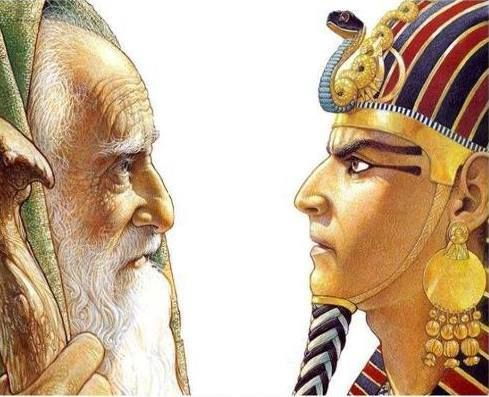
This is not just a story about a man and a king.
This is a confrontation between God’s authority and human pride.
On one side stood Moses, a reluctant shepherd chosen by God.
On the other stood Pharaoh, the most powerful ruler in Egypt, who believed he was above all.
What followed was one of the most dramatic showdowns in the Bible.
The Calling of Moses
The story begins in Exodus 3.
Moses was living in the wilderness when he encountered the burning bush. God spoke to him and gave him a mission.
Go back to Egypt.
Stand before Pharaoh.
Demand the release of the Israelites.
Moses hesitated. He doubted his ability. But God assured him:
“I will be with you.”
This was not Moses’ battle alone. It was God’s plan unfolding.
The First Confrontation
Moses and Aaron went to Pharaoh with a simple message:
“Let my people go.”
Pharaoh’s response was immediate and harsh.
He refused.
Not only that, he made the Israelites’ lives harder by increasing their workload. His pride would not allow him to submit.
This set the stage for a series of events that would shake Egypt to its core.
The Ten Plagues Begin
God began to demonstrate His power through a series of plagues. Each one was a direct challenge to Egypt’s strength and its false gods.
1. Water Turned to Blood
The Nile River, Egypt’s lifeline, turned into blood.
2. Frogs Everywhere
Frogs covered the land, entering homes and disrupting daily life.
3. Gnats or Lice
The dust turned into tiny insects that plagued both people and animals.
4. Swarms of Flies
Flies filled the land, bringing chaos and discomfort.
5. Livestock Disease
Egypt’s animals began to die, affecting food and economy.
6. Painful Boils
People and animals suffered from painful skin sores.
7. Hailstorm
A devastating storm destroyed crops and property.
8. Locusts
What remained of the crops was consumed by locusts.
9. Darkness
A thick darkness covered Egypt for three days.
10. Death of the Firstborn
The final and most severe plague. Every firstborn in Egypt died.
Despite temporary moments of surrender, Pharaoh repeatedly hardened his heart.
Pharaoh’s Pride vs God’s Power
Pharaoh had multiple chances to let the Israelites go.
At times, he seemed ready to give in. But each time relief came, he changed his mind.
This reveals a powerful truth.
Pride can blind a person, even in the face of overwhelming evidence.
Pharaoh saw the power of God, yet refused to submit.
The Turning Point: The Passover
Before the final plague, God gave the Israelites specific instructions.
This event is also recorded in Exodus 12.
They were to mark their doorposts with the blood of a lamb. This would protect them when judgment passed through Egypt.
This moment became known as the Passover.
It was not just protection. It was a sign of faith and obedience.
The Exodus Begins
After the tenth plague, Pharaoh finally broke.
He told Moses to take the Israelites and leave.
After centuries of slavery, the people were finally free.
But the story did not end there.
The Final Showdown at the Red Sea
Soon after letting them go, Pharaoh changed his mind again.
He sent his army to chase the Israelites.
The people found themselves trapped between the Red Sea and the approaching Egyptian army.
Fear spread quickly.
But God made a way.
Moses stretched out his staff, and the sea parted. The Israelites walked through on dry ground.
When the Egyptian army followed, the waters returned and destroyed them.
This marked the final defeat of Pharaoh.
What This Story Teaches Us
God Is Greater Than Any Power
No king, system, or authority can stand against God’s will.
Pride Leads to Destruction
Pharaoh had many opportunities to change, but his pride cost him everything.
Obedience Unlocks Deliverance
Moses followed God step by step. The Israelites obeyed during Passover. Their obedience led to freedom.
God Fights for His People
The Israelites did not defeat Egypt by their own strength. God fought for them.
Deeper Meaning Behind the Story
This story is more than history.
It is a picture of spiritual freedom.
Egypt represents bondage.
Pharaoh represents oppression.
Moses represents God’s chosen servant.
And the Exodus represents deliverance.
Just as God freed Israel, He continues to bring people out of spiritual slavery into freedom.
Conclusion
The story of Moses vs Pharaoh is a powerful reminder that no force can stand against God.
What began as a simple command, “Let my people go,” turned into a full demonstration of divine authority.
Moses stood as a messenger. Pharaoh stood in resistance.
In the end, God’s will prevailed.
Read More:
Moses and Aaron Relationship Explained