

The story of David and Bathsheba is one of the most sobering and honest accounts in the Bible. It does not hide the failure of a great king. Instead, it reveals how power, temptation, and poor choices can lead to devastating consequences.
But it also shows something deeper. It shows how repentance can restore a broken relationship with God.
The Setting: A Dangerous Moment of Idleness
The story begins at a time when kings usually went to war. But David stayed back in Jerusalem.
One evening, from his rooftop, David saw Bathsheba bathing. She was beautiful, and instead of turning away, David chose to pursue her.
This moment was small, but it set everything else in motion.
The Sin: Desire Turned Into Action
David sent for Bathsheba, even though he knew she was married to Uriah, one of his loyal soldiers.
They committed adultery, and Bathsheba later sent word that she was pregnant.
At this point, David had a choice. He could confess and face the consequences. Instead, he tried to hide his sin.
The Cover-Up: One Sin Leads to Another
David called Uriah back from the battlefield, hoping he would go home to his wife so the pregnancy would appear legitimate.
But Uriah refused. Out of loyalty, he would not enjoy comfort while his fellow soldiers were still fighting.
David’s plan failed.
So he made a far darker decision.
He ordered that Uriah be placed on the front lines of battle and then abandoned. Uriah was killed.
David then took Bathsheba as his wife.
What began as desire had now turned into deception and murder.
God’s Response: The Confrontation
God did not ignore what happened.
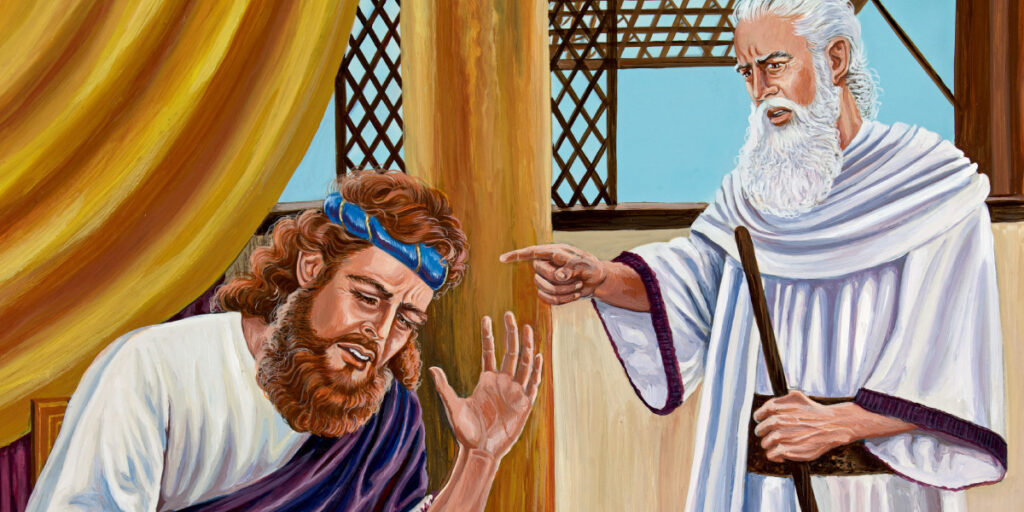
He sent the prophet Nathan to confront David.
Nathan told a story about a rich man who stole a poor man’s only lamb. David, angered by the injustice, declared that the man deserved punishment.
Then Nathan revealed the truth:
“You are the man.”
David could no longer hide.
David’s Repentance
At this moment, David did something that defines his legacy.
He confessed:
“I have sinned against the Lord.”
This was not a shallow apology. It was deep, broken repentance.
Psalm 51, found in the Book of Psalms, reflects his heart:
- He acknowledged his sin
- He asked for mercy
- He desired a clean heart
- He longed to be restored
David did not blame others. He took full responsibility.
The Consequences
Even though David was forgiven, the consequences remained.
- The child born from the affair died
- Violence and conflict entered David’s household
- His family experienced division and tragedy
This shows an important truth: forgiveness does not erase earthly consequences.
What Really Happened — The Deeper Meaning
This story is not just about a moral failure. It reveals deeper realities:
1. Power Can Corrupt
David used his authority to take what was not his.
2. Sin Grows If Not Stopped Early
A single wrong look led to adultery, deception, and murder.
3. No One Is Above Accountability
Even a king was confronted by God.
4. True Repentance Matters
David’s sincerity is what set him apart.
Lessons from David and Bathsheba
- Small compromises can lead to major consequences
- Integrity matters most when no one is watching
- Running from sin only makes things worse
- Owning your mistakes is the first step to healing
- God values a broken and humble heart
Why This Story Still Matters Today
The Bible does not present perfect heroes. It presents real people.
David’s story reminds us that even strong faith can fail under temptation. But it also shows that failure is not the end.
What matters most is how you respond when confronted with the truth.
Conclusion
The story of David and Bathsheba is uncomfortable, but it is necessary.
It exposes the reality of human weakness, the danger of unchecked desire, and the cost of sin.
But it also reveals something hopeful.
No matter how far someone falls, genuine repentance can open the door to restoration.
Read More:
David and Goliath: The Full Story Explained