

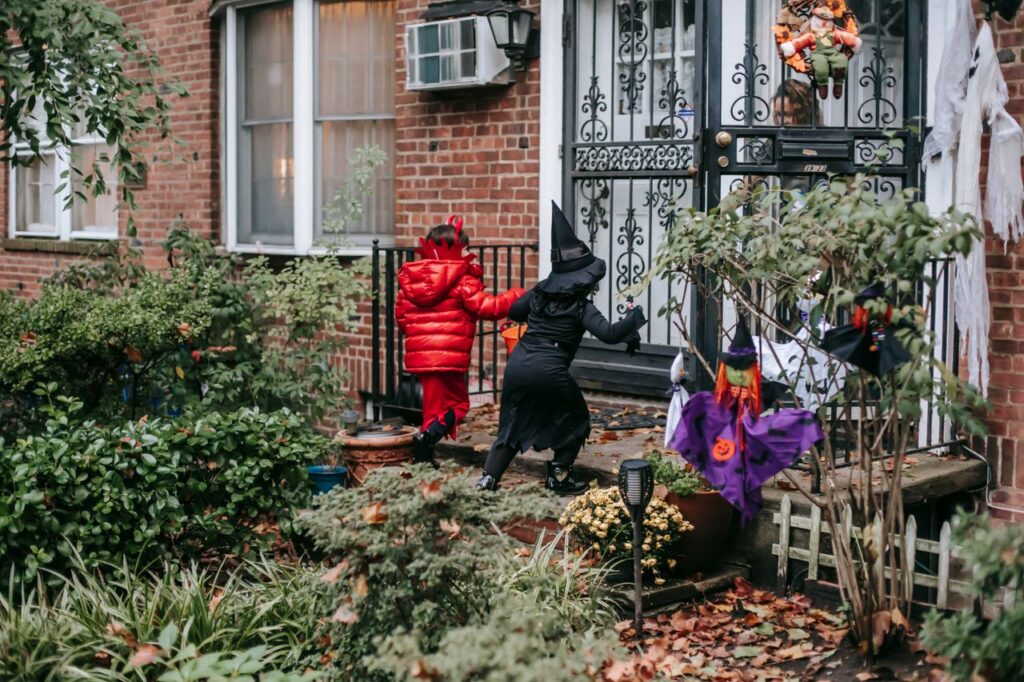
Halloween arrives with glowing pumpkins, frightening costumes, haunted houses, and images of witches and ghosts.
For many people, it is simply a night of candy and entertainment.
But for Christians, October 31 raises a serious question: Bible Verses About Halloween help guide beliefs.
Should believers participate in a holiday associated with darkness and the supernatural? Does Scripture warn against the activities commonly connected with Halloween? And how can Christians distinguish harmless entertainment from practices that conflict with their faith?
The Bible does not mention Halloween by name. However, it speaks clearly about darkness and light, witchcraft and sorcery, spiritual discernment, and the importance of living in a way that honors God.
Understanding these passages can help Christians approach Halloween with wisdom rather than fear, allowing God’s Word to guide their decisions.
1. Ephesians 5:11: Have Nothing to Do With the Works of Darkness
“And have no fellowship with the unfruitful works of darkness, but rather reprove them.”
— Ephesians 5:11, KJV
This is one of the most relevant Bible verses to consider when thinking about Halloween.
In Ephesians 5, Paul encourages Christians to live as children of light. He contrasts a life characterized by goodness, righteousness, and truth with behavior that belongs to spiritual darkness.
His instruction is not simply about avoiding certain activities. It is about examining the kind of life believers are called to live.
Halloween includes a wide range of activities. Some involve ordinary neighborhood gatherings, candy, and costumes. Others deliberately celebrate evil, glorify violence, or incorporate occult practices.
Ephesians 5:11 encourages Christians to examine these differences rather than treating every activity as spiritually identical.
The important question is not merely whether something happens on Halloween. It is whether participating in it is consistent with the Christian commitment to follow Christ.
Reflection: Does this activity help me walk in the light of Christ, or does it encourage something that contradicts my faith?
2. John 8:12: Jesus Is the Light of the World
“I am the light of the world: he that followeth me shall not walk in darkness, but shall have the light of life.”
— John 8:12, KJV
Darkness is a recurring biblical image for sin, spiritual blindness, and separation from God’s truth. Light represents God’s goodness, truth, and life.
When Jesus declares Himself the light of the world, He offers more than a comforting metaphor. He identifies Himself as the one who leads people out of spiritual darkness.
Halloween often uses darkness as entertainment.
Shadows, frightening figures, and supernatural imagery create an atmosphere of mystery and fear.
These things do not automatically make every Halloween activity sinful.
They can provide an opportunity to reflect on the deeper meaning of light and darkness in Scripture.
Bible Verses About Halloween offer guidance on how to view such themes.
For Christians, Jesus remains the center of that distinction.
Following Christ means allowing His teachings to shape our choices, even when the surrounding culture encourages different values.
Instead of allowing frightening imagery to dominate your attention, use this season to remember the hope, truth, and life found in Jesus.
Reflection: Am I allowing Christ’s light to guide my decisions, or am I simply following what everyone around me is doing?
3. Deuteronomy 18:10–12: What the Bible Says About Witchcraft
Deuteronomy 18:10–12 warns the Israelites against practices such as divination, sorcery, witchcraft, consulting mediums, and seeking messages from the dead.
These instructions are among the clearest biblical passages concerning occult practices.
In the context of ancient Israel, God was calling His people to reject the spiritual practices of surrounding nations and remain faithful to Him. Rather than seeking hidden knowledge or supernatural guidance through forbidden methods, they were to trust God’s direction.
This passage is particularly relevant when considering Halloween activities that involve more than costumes or fictional stories.
There is a meaningful difference between dressing as a fictional character and attempting to communicate with spirits, perform spells, or seek supernatural power through occult rituals.
The Bible’s warnings concern the latter kinds of practices.
Christians who want to honor Scripture should take these warnings seriously while avoiding the temptation to judge or mistreat people simply because of their appearance or a costume they wear.
Reflection: Am I seeking wisdom and guidance from God, or am I being drawn toward practices that Scripture warns against?
4. Leviticus 19:31: Do Not Seek Guidance From Mediums
“Regard not them that have familiar spirits, neither seek after wizards, to be defiled by them: I am the LORD your God.”
— Leviticus 19:31, KJV
This verse reinforces the Bible’s warning against seeking spiritual guidance from mediums and practitioners of the occult.
Throughout Scripture, God’s people are repeatedly encouraged to depend on Him rather than turn to forbidden spiritual sources.
The lesson is not that Christians should live in constant suspicion of the supernatural. Instead, it is that spiritual curiosity should never become more important than faithfulness to God.
Halloween sometimes presents fortune-telling, spirit communication, and supernatural rituals as exciting games. Christians should consider whether these activities remain harmless entertainment or cross into practices that conflict with their biblical convictions.
When questions arise, Scripture provides a foundation for making thoughtful decisions.
God does not ask His people to discover every hidden mystery. He calls them to trust Him, seek His wisdom, and remain faithful to His Word.
5. 1 Thessalonians 5:22: Abstain From Every Form of Evil
“Abstain from all appearance of evil.”
— 1 Thessalonians 5:22, KJV
This familiar verse is frequently mentioned in discussions about Halloween.
The surrounding passage encourages believers to test what they hear, hold on to what is good, and reject evil. The central theme is spiritual discernment.
Christians should not assume that something is acceptable simply because it is popular or entertaining. They should consider what an activity involves and whether it encourages attitudes or behavior that conflict with their faith.
At the same time, discernment requires more than judging appearances. A costume that looks frightening does not necessarily reveal a person’s beliefs or intentions.
The goal is to evaluate our own actions honestly, not to condemn others based on superficial impressions.
If a Halloween activity celebrates cruelty, encourages sinful behavior, or involves occult practices, a Christian has good reason to avoid it.
Reflection: Can I participate in this activity with a clear conscience before God?
6. Romans 12:2: Do Not Conform to the World
“And be not conformed to this world: but be ye transformed by the renewing of your mind.”
— Romans 12:2, KJV
One of the challenges Christians face during Halloween is social pressure.
Children may want to join their friends. Adults may feel that refusing to participate makes them seem unusual. Popular entertainment can also make certain themes appear harmless simply because they are everywhere.
Romans 12:2 reminds believers that popularity is not the same as goodness.
Paul calls Christians to a transformed mind, one that learns to recognize and follow God’s will rather than blindly imitate the surrounding culture.
This does not mean rejecting every cultural tradition. Instead, it means examining traditions in the light of Scripture and deciding which ones can be embraced without compromising Christian convictions.
Some Christian families choose not to celebrate Halloween at all. Others participate in limited activities, such as giving candy to neighbors, while avoiding occult themes.
The important thing is to make the decision thoughtfully rather than allowing social pressure to make it for you.
7. 2 Corinthians 6:14: What Fellowship Has Light With Darkness?
“For what fellowship hath righteousness with unrighteousness? and what communion hath light with darkness?”
— 2 Corinthians 6:14, KJV
Paul uses the contrast between light and darkness to challenge believers to consider their spiritual commitments.
This verse is sometimes applied broadly to Halloween, but its immediate context concerns relationships and partnerships that can compromise faithfulness to God. It should therefore be read within that context rather than treated as a direct prohibition of every activity associated with Halloween.
Nevertheless, its underlying principle is important.
Christians should be careful about entering situations that pressure them to compromise their beliefs or participate in practices they understand to be wrong.
If an event celebrates occult rituals or encourages behavior contrary to Scripture, believers can choose not to participate.
Faith sometimes requires standing apart from the crowd. But it should also be expressed with humility, patience, and love.
8. James 4:7: Resist the Devil
“Submit yourselves therefore to God. Resist the devil, and he will flee from you.”
— James 4:7, KJV
Discussions about Halloween can sometimes become dominated by fear of demons, evil spirits, or supernatural threats.
James offers a different emphasis: submit to God and resist the devil.
The order matters. Spiritual resistance begins with surrendering to God, following His wisdom, and turning away from sin.
Christians do not need to become obsessed with darkness to take spiritual evil seriously. Nor should they treat every unsettling image or ordinary Halloween decoration as evidence of spiritual danger.
Instead, they can focus on prayer, Scripture, obedience, and trust in God.
The Christian life is not meant to be controlled by fear. It is meant to be shaped by faithfulness to the Lord.
9. Ephesians 6:11–12: Put on the Whole Armor of God
“Put on the whole armor of God, that ye may be able to stand against the wiles of the devil.”
— Ephesians 6:11, KJV
Paul describes the Christian life as a spiritual struggle and urges believers to put on the whole armor of God.
The following verses identify truth, righteousness, faith, salvation, the Word of God, and prayer as essential elements of this spiritual readiness.
Notice what Paul emphasizes. He does not encourage believers to become fascinated with evil. He tells them to become equipped to stand against it.
This is a valuable principle during Halloween and throughout the year.
Rather than spending all your attention on frightening symbols, invest in the things that strengthen your faith. Read Scripture. Pray consistently. Practice righteousness. Build a life rooted in truth.
Spiritual maturity comes from growing closer to God, not from becoming increasingly preoccupied with darkness.
10. Psalm 27:1: The Lord Is My Light and My Salvation
“The LORD is my light and my salvation; whom shall I fear? the LORD is the strength of my life; of whom shall I be afraid?”
— Psalm 27:1, KJV
While some Halloween passages warn against spiritual darkness, this verse reminds believers where their confidence should rest.
David does not claim that frightening circumstances never exist. Instead, he declares that God is greater than the things that cause fear.
This message is especially helpful for children and adults who feel uneasy around horror imagery, frightening costumes, or stories about supernatural evil.
Christians can establish sensible boundaries around entertainment without allowing fear to control their lives.
God’s presence is not limited to one place or one season. His faithfulness remains constant whether the world around us feels peaceful or unsettling.
When fear rises, return to the promises of Scripture and remember the character of the God you serve.
11. Philippians 4:8: Focus on What Is Pure and Worthy of Praise
“Finally, brethren, whatsoever things are true, whatsoever things are honest, whatsoever things are just, whatsoever things are pure, whatsoever things are lovely, whatsoever things are of good report; if there be any virtue, and if there be any praise, think on these things.”
— Philippians 4:8, KJV
This verse provides a practical way to evaluate entertainment.
Instead of asking only whether something is technically permitted, Christians can ask what it encourages them to think about and desire.
Does it celebrate kindness or cruelty? Does it promote what is honorable or glorify what is corrupt? Does it leave room for a healthy conscience, or does it deliberately draw a person toward ideas and activities they believe are wrong?
Not every fictional story involving darkness is automatically sinful. Context, content, intention, and conscience all matter.
Nevertheless, Philippians 4:8 reminds believers that what they repeatedly choose to watch, celebrate, and dwell on can influence their thoughts.
Christians should seek entertainment that does not undermine their commitment to what is true, pure, and good.
12. 1 John 4:4: Greater Is He That Is in You
“Greater is he that is in you, than he that is in the world.”
— 1 John 4:4, KJV
This verse offers reassurance to Christians who are concerned about spiritual evil.
John encourages believers to test spiritual claims rather than accept every spirit or message without discernment. His words point to God’s greater power and the importance of remaining faithful to the truth.
The message is not that Christians should ignore evil. It is that they should not give evil greater attention than God deserves.
Halloween can become an occasion for remembering that Christian faith rests on the victory and authority of Jesus Christ.
Believers can acknowledge the reality of spiritual struggle while refusing to live in constant anxiety.
The God who calls His people to holiness is also the God who offers strength, wisdom, and hope.
13. Romans 14:5–6: Christian Convictions and Personal Conscience
“Let every man be fully persuaded in his own mind.”
— Romans 14:5, KJV
One reason Christians disagree about Halloween is that the Bible does not directly address the modern holiday.
Some believers interpret its associations with death, witchcraft, and the occult as sufficient reason to avoid it completely. Others distinguish between those practices and ordinary neighborhood activities, such as handing out candy or attending a costume gathering.
Romans 14 addresses disagreements among believers over matters of conscience, including how particular days are regarded. It encourages Christians to act sincerely before the Lord and avoid unnecessary judgment of one another.
This passage does not make every choice morally equivalent. Scripture still clearly warns against certain practices, including sorcery and idolatry.
However, it reminds Christians to distinguish explicit biblical commands from decisions that require personal discernment.
If your conscience leads you to avoid Halloween, you can follow that conviction without hostility toward others. If you participate in certain activities, you should do so thoughtfully and without dismissing the sincere convictions of fellow believers.
14. Matthew 5:14–16: Let Your Light Shine
“Ye are the light of the world. A city that is set on an hill cannot be hid.”
— Matthew 5:14, KJV
Jesus calls His followers to be a light to the world.
This teaching offers a positive way to approach Halloween. The Christian response to darkness is not simply to criticize it but to live in a way that reflects the goodness of God.
For some families, that might mean choosing not to celebrate Halloween and using the evening for prayer, Scripture reading, or family activities.
For others, it may mean participating in appropriate neighborhood gatherings while showing kindness, generosity, and respect for others.
Whatever a Christian family decides, its conduct should reflect the character of Christ.
A gracious explanation is often more effective than an angry argument. An act of kindness can communicate Christian love more clearly than a harsh judgment.
Jesus calls believers to let their light shine so that others may see their good works and glorify the Father.
15. 2 Timothy 1:7: God Has Not Given Us a Spirit of Fear
“For God hath not given us the spirit of fear; but of power, and of love, and of a sound mind.”
— 2 Timothy 1:7, KJV
This verse is an important reminder when conversations about Halloween become filled with anxiety.
Christians should take biblical warnings seriously, but they do not need to approach every costume, decoration, or cultural tradition with panic.
Paul wrote these words to encourage Timothy to remain faithful and courageous in his service to God.
The verse points toward a life marked by spiritual strength, love, and sound judgment.
That means parents can establish clear boundaries for their children without frightening them unnecessarily. Adults can reject practices that violate their beliefs without assuming that every person who disagrees is deliberately embracing evil.
Faith should lead to wisdom and courage, not needless suspicion.
When making decisions about Halloween, seek God’s guidance, examine Scripture carefully, and respond with a sound mind and a loving heart.
What Should Christians Do About Halloween?
After examining these Bible verses, you may still wonder how to apply them to your own family.
The answer begins with recognizing two important truths.
First, Scripture explicitly warns against occult practices such as sorcery, divination, and seeking guidance from spirits. Christians who want to follow God’s Word should take those warnings seriously.
Second, the Bible does not directly prohibit every modern Halloween activity. Christians therefore need to distinguish between practices Scripture clearly condemns and activities that require careful judgment.
Here are five practical ways to approach the holiday.
1. Establish Clear Biblical Boundaries
Decide which activities conflict with your convictions. If you believe certain costumes, rituals, films, or celebrations encourage evil or violate Scripture, it is reasonable to avoid them.
2. Talk Honestly With Your Children
Explain your family’s beliefs using age-appropriate language. Teach children that the goal is not to hate people who make different choices, but to learn how to make decisions that honor God.
3. Avoid Occult Practices
Passages such as Deuteronomy 18:10–12 provide clear warnings about witchcraft, divination, and consulting spirits. Avoid activities that involve these practices rather than treating them as spiritually insignificant.
4. Choose What Strengthens Your Faith
Consider spending time reading Scripture, praying together, serving others, or enjoying family activities that reflect your values.
5. Treat Others With Grace
Christians can hold firm convictions without insulting, shaming, or mistreating people who celebrate differently. Let your words and actions reflect both truth and love.
Frequently Asked Questions
Does the Bible mention Halloween?
No. The Bible does not mention Halloween by name. The modern holiday developed after the biblical period. However, passages about darkness, witchcraft, holiness, and spiritual discernment are often used by Christians to evaluate Halloween practices.
What Bible verse is best for Halloween?
Ephesians 5:11 is particularly relevant because it warns believers against participating in the works of darkness. John 8:12 is also a powerful reminder that Jesus is the light of the world.
Is Halloween a sin for Christians?
The Bible does not explicitly classify the modern holiday of Halloween as a sin. However, it clearly warns against practices such as sorcery and divination. Christians may disagree about other Halloween activities and should evaluate them according to Scripture, conscience, and their purpose.
What does the Bible say about witches?
Deuteronomy 18:10–12, Leviticus 19:31, and Galatians 5:19–21 warn against witchcraft and related occult practices. These passages address spiritual practices, not permission to mistreat people who are associated with them.
Can Christians celebrate Halloween without participating in evil?
Some Christians believe they can participate in limited activities, such as handing out candy or attending family-friendly events, while avoiding occult practices. Others choose not to celebrate at all. Each family should examine its convictions and apply biblical principles thoughtfully.
Final Thoughts: Walk in the Light of Christ
Halloween presents Christians with an opportunity to think seriously about the relationship between faith and culture.
Scripture offers clear warnings against occult practices and repeatedly calls believers to reject evil, pursue holiness, and remain faithful to God. It also teaches them to exercise discernment, respect conscience, and treat others with love.
The purpose of these teachings is not to make Christians obsessed with darkness. It is to help them live faithfully in the light of Christ.
You do not need to let cultural pressure determine your choices. Nor do you need to allow fear to dominate your faith. Read God’s Word, pray for wisdom, and make decisions that reflect your commitment to Jesus.
Remember the words of John 8:12: Jesus is the light of the world.
When the world celebrates darkness, Christians have an opportunity to reflect the light, truth, and love of Christ.
Read More:
Bible Verses About Halloween for Kids
Can Christians Celebrate Halloween? The Bible’s Definitive Answer
Essential 100 Bible Verses About Halloween: What Scripture Says