

After the flood, everything was still. The waters had gone down. Humanity had a fresh beginning.
And then something unexpected happens.
A man who obeyed God when no one else did… falls into a moment of weakness.
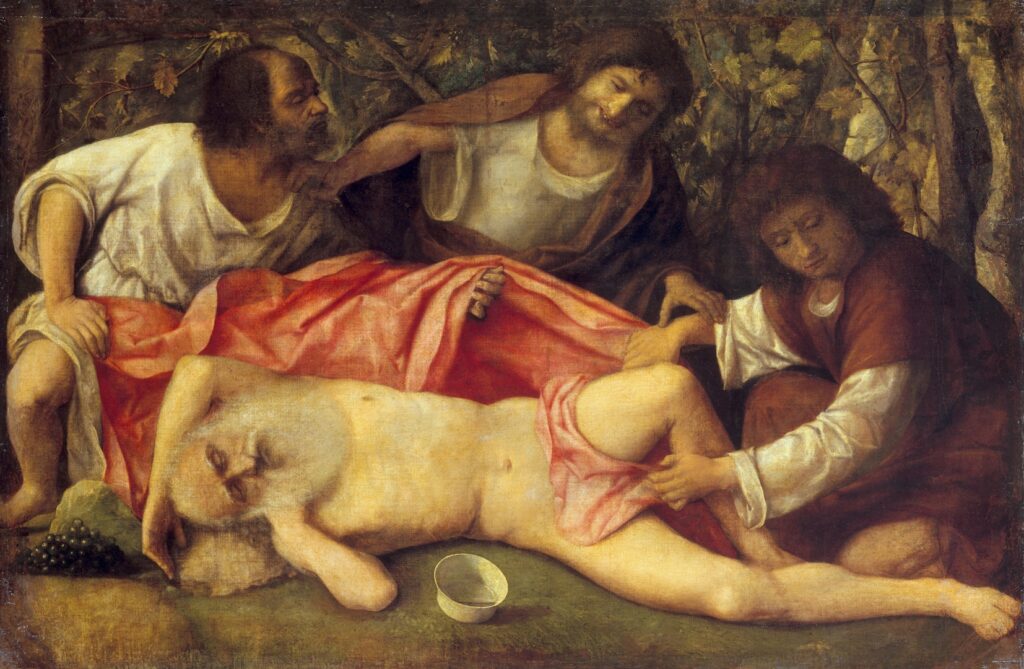
The story of Noah’s drunkenness appears in Book of Genesis 9:20–27. It’s brief, but it reveals something deeply human.
Even the most faithful can stumble.
The Biblical Account
The text tells us:
“Noah, a man of the soil, proceeded to plant a vineyard. When he drank some of its wine, he became drunk and lay uncovered inside his tent.” (Genesis 9:20–21)
After this:
- Ham sees his father uncovered and tells his brothers
- Shem and Japheth walk in backward and cover Noah respectfully
- When Noah wakes, he pronounces a curse on Canaan, Ham’s son
It’s a simple sequence. But every detail matters.
What Exactly Happened?
Noah planted a vineyard, produced wine, and drank excessively.
The Bible does not condemn wine itself here. The issue is drunkenness—losing control, becoming exposed, and vulnerable.
This is the first recorded instance of drunkenness in Scripture. And it appears right after a new beginning for humanity.
That contrast is intentional.
Why Is This Story Included?
The Bible doesn’t hide the failures of its heroes.
Earlier, Noah is described as “a righteous man, blameless among the people of his time” (Genesis 6:9). Yet here, he is seen in a compromised state.
This teaches a clear truth:
Faithfulness does not equal perfection.
The Deeper Focus: Ham’s Response
The passage quickly shifts attention from Noah’s mistake to Ham’s behavior.
Ham exposes his father’s shame instead of covering it.
Meanwhile:
- Shem and Japheth act with dignity
- They avoid looking at Noah
- They protect his honor rather than spreading his failure
This contrast is central to the story.
It raises a quiet but powerful question:
When someone falls, do you expose them or cover them?
The Curse of Canaan — Understanding the Context
When Noah wakes, he declares:
“Cursed be Canaan! The lowest of slaves will he be to his brothers.”
This statement has often been misunderstood.
Here are key clarifications:
- The curse is directed at Canaan, not Ham
- It reflects future outcomes rather than a command for behavior
- It describes consequences within a specific historical context
This passage has been misused in history, but the biblical text itself does not justify oppression or injustice.
Lessons from Noah’s Drunkenness
1. Even the Righteous Can Fall
Noah walked closely with God, yet he still failed. Spiritual strength in one season does not eliminate future weakness.
2. After Victory Comes Vulnerability
Noah survived the flood. But after the crisis passed, he became careless. Often, people are most vulnerable after major success.
3. Your Response to Others Reveals Your Character
Ham exposed weakness.
Shem and Japheth preserved dignity.
The difference is not in what they saw—but in how they responded.
4. Private Actions Can Have Public Consequences
Noah’s personal failure affected his family and future generations. Actions rarely stay isolated.
A Quiet Reflection
This story doesn’t resolve neatly. There’s no immediate redemption scene. No clear closure.
It simply presents reality.
A faithful man. A human failure. A divided response.
And that honesty is what gives the story its power.
Read More:
Noah and the Ark Complete Story Explained
How Long Did Noah Take to Build the Ark?
Who Was on Noah’s Ark? Names and Roles
What Happened After Noah’s Flood? Life After the Ark Explained