

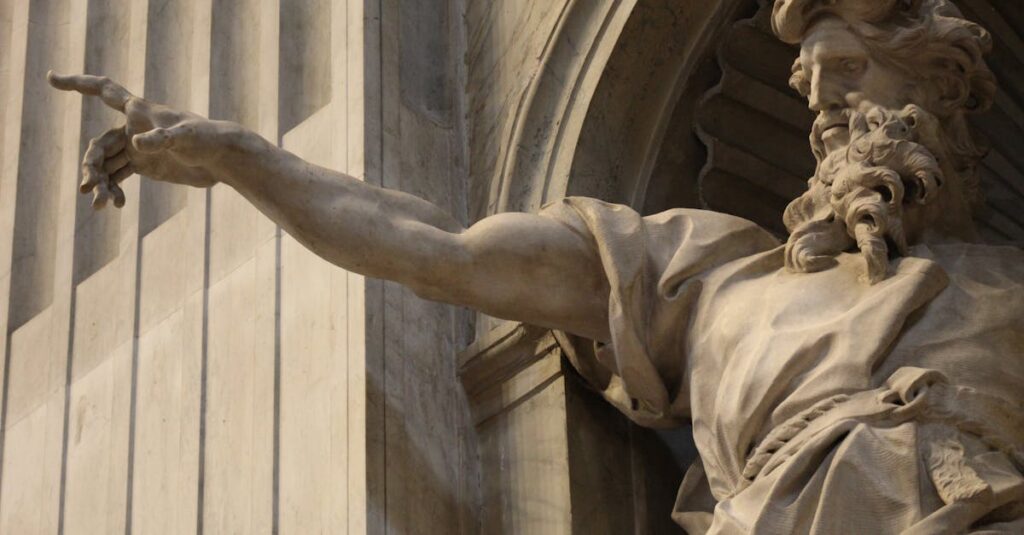
Moses led Israel out of slavery, walked with God, and shaped a nation.
Yet one question continues to stir curiosity.
Why did Moses never enter the Promised Land?
The answer is both powerful and sobering. His death was not just the end of a life. It was a moment filled with meaning, justice, and divine purpose.
Background
The story of Moses’ death is recorded in the Book of Deuteronomy.
After leading the Israelites for 40 years in the wilderness, Moses stood on the edge of the Promised Land. The journey was complete, but his personal story was about to end.
How Did Moses Die?
Moses did not die in battle. He did not die from illness.
God Himself told Moses that his time had come.
He climbed Mount Nebo, where God showed him the Promised Land from a distance.
Then, Moses died there.
The Bible tells us something unique.
God buried him.
No one knows the exact location of his grave to this day.
This makes Moses’ death one of the most mysterious in Scripture.
Why Moses Could Not Enter the Promised Land
This is the heart of the story.
Moses was not allowed to enter the Promised Land because of one act of disobedience.
At a moment when the people needed water, God told Moses to speak to a rock.
Instead, Moses struck the rock in anger.
This event, recorded in the Book of Numbers, may seem small, but it carried deep meaning.
Moses misrepresented God before the people. He acted out of frustration instead of obedience.
Because of this, God told him he would see the land but not enter it.
A Leader Who Saw but Did Not Step In
Imagine the weight of that moment.
Forty years of leadership.
Endless struggles.
Countless sacrifices.
And yet, Moses could only look at the Promised Land from afar.
This was not cruelty. It was consequence.
God held Moses, as a leader, to a higher standard.
The Grace Within the Judgment
Even in judgment, there was grace.
God allowed Moses to see the land.
God Himself buried him.
The Bible also says Moses died with strength still in him. His eyes were not weak. His vigor had not faded.
This was not a tragic ending.
It was a dignified transition.
What Moses’ Death Teaches Us
The death of Moses carries deep lessons:
- Leadership comes with accountability
- Obedience matters, even in small moments
- God’s plans are bigger than one person
- Faithfulness does not always mean seeing the final result
- God honors those who serve Him
Moses completed his mission, even if he did not enter the destination.
A Greater Transition
After Moses’ death, leadership passed to Joshua.
The mission continued.
This shows something important.
God’s work does not stop with one leader. It moves forward.
Moses prepared the way, even if he did not finish the journey himself.
Conclusion
The death of Moses was not a failure.
It was a powerful reminder of both justice and grace.
He was a leader who walked closely with God, carried heavy responsibility, and finished his calling with honor.
He saw the promise, even if he did not step into it.
And in that, his story remains one of the most profound in the Bible.
Read More:
Why Moses Did Not Enter the Promised Land – Biblical Explanation
Moses and the Ten Plagues Explained – Biblical Story and Meaning
Moses and the Burning Bush Explained – Meaning and Biblical Lessons
Who Was Moses in the Bible? Full Story, Meaning, and Lessons