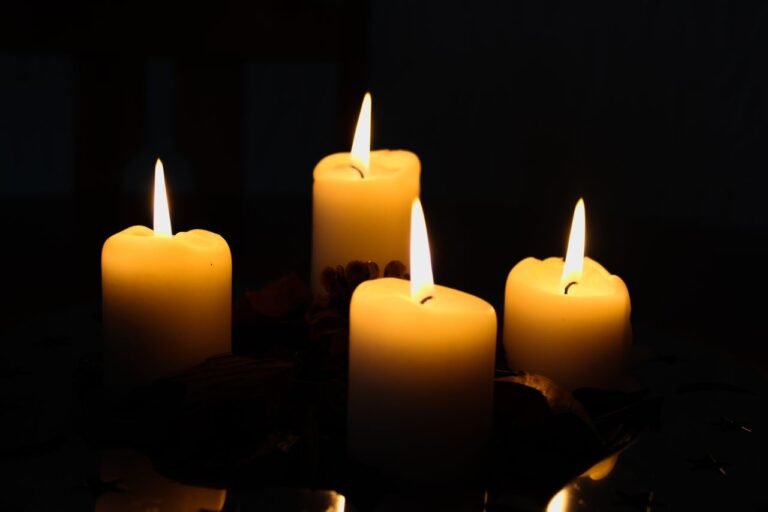


As Christmas approaches, many Christian families and churches display a beautiful circle of evergreen branches decorated with candles. Known as an Advent wreath, this traditional decoration is one of the most recognizable symbols of the Advent season.
But an Advent wreath is more than a Christmas decoration. For Christians, it represents hope, expectation, and preparation for the coming of Jesus Christ. Each candle marks another step toward Christmas, encouraging believers to pause, pray, and reflect on the meaning of Christ’s birth.
If you have ever wondered what an Advent wreath is, what its candles symbolize, or how to make one at home, this guide explains everything you need to know.
What Is an Advent Wreath?
An Advent wreath is a circular arrangement of evergreen branches with four candles, traditionally used by Christians during the weeks leading up to Christmas.
Some wreaths also include a fifth candle in the center, called the Christ candle, which is lit on Christmas Eve or Christmas Day in certain traditions.
The Advent wreath is usually displayed in churches or homes where families gather for prayer and worship. Beginning on the first Sunday of Advent, one candle is lit each week until all four candles are burning.
The wreath helps Christians prepare spiritually for Christmas by remembering the coming of Jesus Christ.
Its traditional elements carry symbolic meanings. The circular shape represents eternity, the evergreen branches symbolize enduring life and hope, and the growing candlelight reminds believers of the light associated with Jesus Christ.
Although Advent wreaths are popular in many Christian traditions, their use is a church custom rather than a practice explicitly commanded in the Bible.
What Is the Meaning of an Advent Wreath?
The Advent wreath symbolizes spiritual preparation, hope, and expectation as Christians approach Christmas.
1. The Circle Represents Eternity
An Advent wreath is usually circular, without a beginning or an end. Many Christians interpret this shape as a reminder of God’s eternal nature and everlasting love.
The circle can also represent the hope of eternal life associated with Jesus Christ.
2. Evergreen Branches Represent Life and Hope
Advent wreaths are traditionally made from evergreen branches, such as pine, fir, or cedar.
These plants remain green throughout winter, even when many other plants lose their leaves. For this reason, evergreen branches are often associated with enduring life, hope, and renewal.
In the Christian context, they can remind believers of the new life and hope they associate with Jesus Christ.
3. The Candles Represent the Growing Light of Christ
The four candles are the central feature of an Advent wreath.
A new candle is lit on each Sunday of Advent, gradually increasing the amount of light as Christmas approaches. This growing light symbolizes anticipation and the Christian hope associated with Jesus’ coming.
In John 8:12, Jesus says, “I am the light of the world.”
For Christians, the candles help make the spiritual meaning of Advent visible and memorable.
4. The Wreath Represents Preparation for Christmas
The Advent wreath creates a weekly opportunity for prayer, reflection, and worship.
Families may read a Bible passage, pray together, or discuss a theme associated with each Sunday. This simple practice encourages them to focus on the birth of Jesus rather than becoming distracted by the busyness of the holiday season.
What Do the Four Advent Candles Mean?
The four candles represent the four Sundays of Advent. In many churches, each candle is associated with one of four themes: hope, peace, joy, and love.
However, candle meanings and colors vary among Christian denominations, and not every church follows exactly the same arrangement.
First Candle: Hope
The first candle is commonly associated with hope and is sometimes called the Prophecy Candle.
It reminds Christians of God’s promises and the expectation of the coming Messiah. A related Bible passage is Isaiah 9:6, which speaks of a child who will be born and a son who will be given.
Second Candle: Peace
The second candle is often associated with peace and preparation. Some traditions call it the Bethlehem Candle.
It reminds believers to prepare their hearts for Christ and seek peace through faith, forgiveness, and love for others.
Third Candle: Joy
The third candle is traditionally rose-colored in many Western churches. It is associated with joy and is sometimes called the Shepherd’s Candle.
This Sunday is known as Gaudete Sunday in many traditions. It celebrates the approaching arrival of Christmas.
Fourth Candle: Love
The fourth candle is commonly associated with love and is sometimes called the Angel’s Candle.
It reminds Christians of God’s love for humanity and the message of salvation connected with Jesus’ birth.
These names are common in some modern Advent traditions, but they are not universal. Some churches assign different meanings to the candles or follow a different sequence of themes.
What Is the Fifth Candle on an Advent Wreath?
Some Advent wreaths include a fifth candle placed in the center of the circle.
This candle is usually white and is called the Christ candle.
It represents Jesus Christ, the central figure of the Christmas celebration. In traditions that use it, the candle is lit on Christmas Eve or Christmas Day to mark the transition from Advent anticipation to the celebration of Christ’s birth.
The Christ candle is not included in every Advent wreath. Some churches and families use only the four weekly candles.
What Colors Are Advent Wreath Candles?
The most familiar Advent wreath arrangement in many Western Christian traditions includes three purple or violet candles and one rose-colored candle.
Some churches use blue candles instead of purple, while other communities choose different colors.
| Candle | Common Color | Common Meaning |
|---|---|---|
| First candle | Purple or violet | Hope |
| Second candle | Purple or violet | Peace |
| Third candle | Rose or pink | Joy |
| Fourth candle | Purple or violet | Love |
| Optional Christ candle | White | Jesus Christ |
Purple or violet is traditionally associated with reflection, preparation, and repentance in many Western liturgical churches.
The rose-colored candle marks the third Sunday, often called Gaudete Sunday, when the tone of the season becomes more joyful as Christmas approaches.
White is commonly used for the optional Christ candle because it symbolizes purity and celebration.
Not all churches use these exact colors or interpretations. Blue candles, for example, are common in some Anglican and Lutheran traditions.
What Is the History of the Advent Wreath?
The Advent wreath developed through Christian tradition over time. Although its exact origins are debated, the practice is commonly traced to nineteenth-century Germany.
One widely cited figure in its history is Johann Hinrich Wichern, a Lutheran pastor and educator who worked with children in Hamburg.
In 1839, Wichern used a large wooden ring with candles to help children count the days leading up to Christmas. The arrangement included smaller candles for weekdays and larger candles for Sundays.
This early Advent arrangement differed from the four-candle wreath most people recognize today.
Over time, the custom was simplified, and the wreath with four Sunday candles became popular in German Lutheran communities. The practice subsequently spread to other Christian churches and countries.
As the tradition developed, the wreath became associated with the spiritual themes of Advent and the expectation of Christ’s coming.
Today, Advent wreaths are used in Catholic, Lutheran, Anglican, and other Christian communities, although their appearance and accompanying customs differ.
Is the Advent Wreath Biblical?
The Bible does not mention the Advent wreath or command Christians to use candles and evergreen branches before Christmas.
The wreath developed as a Christian devotional tradition, and its symbolism reflects ideas that Christians find throughout Scripture.
Here are several Bible passages connected with the themes of Advent:
- John 8:12: Jesus describes Himself as the light of the world.
- Isaiah 9:6: A prophecy Christians associate with the birth of Jesus.
- Luke 2:10–11: The announcement of Jesus’ birth as good news of great joy.
- Romans 15:13: A prayer that believers may be filled with hope, joy, and peace.
These passages connect with the themes often represented by Advent candles.
Some Christians appreciate the Advent wreath as a visual aid for prayer and reflection. Others choose not to observe the custom because it is not specifically required in Scripture.
Whether or not a family uses an Advent wreath, the central purpose of Advent remains spiritual preparation for Christmas.
How to Make an Advent Wreath at Home
Making an Advent wreath can be a meaningful activity for families, church groups, or individuals who want to establish a Christmas tradition.
You do not need expensive supplies. A simple wreath made with evergreen branches and four candles can serve the same devotional purpose as an elaborate arrangement.
Materials You Will Need
Gather the following supplies before you begin:
- A circular wreath base, such as a metal ring or sturdy tray.
- Evergreen branches, either fresh or artificial.
- Four candles, traditionally three purple or violet and one rose-colored.
- Four stable candle holders.
- Floral wire or suitable craft materials to secure the greenery.
- Optional decorations, such as pine cones, ribbons, or small ornaments.
If you want to include a Christ candle, add a white candle and a suitable holder for the center.
For a safer arrangement, consider using battery-operated LED candles instead of open flames.
Step 1: Prepare the Wreath Base
Place your wreath base on a stable, level surface.
If you are using a plain ring, arrange the evergreen branches around it and secure them with floral wire. Overlap the branches so that the base is covered evenly.
Artificial greenery is a convenient alternative if you want a wreath that can be reused each year.
Step 2: Arrange the Four Candles
Position four candle holders around the wreath, leaving enough space between them.
Arrange the candles in a circle, ensuring that each one stands securely upright.
If you are following the common Western color arrangement, use three purple or violet candles and one rose-colored candle.
The optional white Christ candle can be placed in the center.
Step 3: Add Decorations
Decorate the wreath with pine cones, ribbons, or other seasonal accents if you wish.
Keep decorations away from candle flames and avoid using highly flammable materials near open candles.
The wreath does not need to be elaborate. A simple arrangement can be just as meaningful.
Step 4: Choose Bible Readings and Prayers
Before Advent begins, choose a Bible passage and a short prayer for each Sunday.
For example, you might select a passage about hope for the first Sunday, peace for the second, joy for the third, and love for the fourth.
You can use the same readings each year or choose new ones based on your family’s needs.
Step 5: Light One Candle Each Sunday
On the first Sunday of Advent, light the first candle. On the second Sunday, light the first and second candles, continuing the pattern each week.
Use the time to read Scripture, pray, and discuss the meaning of the season.
If you include a Christ candle, follow your family’s or church’s tradition for lighting it on Christmas Eve or Christmas Day.
Candle safety: Never leave burning candles unattended. Keep the wreath away from curtains and other flammable objects, use stable holders, and extinguish all flames before leaving the room. Children should be supervised around candles. LED candles are a good alternative for households with young children or pets.
How to Use an Advent Wreath for Family Prayer
An Advent wreath can become the center of a simple weekly family devotion.
You do not need a long service or formal prayers. A few minutes of shared reflection can help everyone focus on the meaning of Christmas.
Here is a simple routine you can follow each Sunday:
- Gather together around the wreath.
- Light the candle or candles for that Sunday.
- Read a short Bible passage.
- Explain the week’s theme in simple words.
- Say a prayer together.
- Share one way to practice the theme during the coming week.
For example, during the week focused on love, family members might choose to help a neighbor, write a thank-you note, or support someone who is struggling.
For children, you can ask simple questions such as, “What is one way we can bring joy to someone this week?” or “How can we show kindness to someone who feels lonely?”
These conversations help connect the symbolism of the wreath with everyday Christian living.
Frequently Asked Questions About Advent Wreaths
1. What is the purpose of an Advent wreath?
The purpose of an Advent wreath is to help Christians prepare spiritually for Christmas. Its four candles mark the Sundays of Advent and symbolize the expectation of Jesus Christ’s coming.
2. When should you start lighting an Advent wreath?
The first candle is lit on the first Sunday of Advent. Another candle is lit on each following Sunday until all four are burning.
3. Why are there four candles on an Advent wreath?
The four candles represent the four Sundays of Advent. Many traditions associate them with hope, peace, joy, and love, although the meanings can vary among churches.
4. Why is one Advent candle pink?
The rose-colored candle is traditionally lit on the third Sunday of Advent in many Western churches. It symbolizes joy and marks Gaudete Sunday, when Christmas is drawing closer.
5. Does every Advent wreath have five candles?
No. The traditional wreath has four candles. Some wreaths include a fifth, white Christ candle in the center, which is lit on Christmas Eve or Christmas Day in certain traditions.
6. Can you make an Advent wreath without real greenery?
Yes. Artificial evergreen branches, a reusable wreath base, and LED candles can be used to create a practical and safe Advent wreath.
7. Is an Advent wreath a Catholic tradition?
Advent wreaths are used by many Catholics, but the tradition is not exclusive to the Catholic Church. Lutheran, Anglican, and other Christian communities also use them.
8. Is an Advent wreath required by the Bible?
No. The Bible does not require Christians to use an Advent wreath. It is a Christian tradition that helps many believers reflect on the biblical meaning of Advent and Christmas.
Conclusion
An Advent wreath is much more than a decoration for the Christmas season. It is a traditional Christian symbol of hope, preparation, and the growing anticipation of Jesus Christ’s coming.
Its evergreen branches represent enduring life, while its candles provide a weekly reminder to pause and reflect on the spiritual meaning of Christmas. For many Christians, lighting the wreath becomes an opportunity to pray, read Scripture, and share faith with family and friends.
Although Advent wreath traditions vary among churches, the central message remains the same: Christmas is a time to remember the birth of Jesus and the hope Christians find in Him.
Whether you choose a traditional wreath with purple and rose candles or a simple arrangement with LED lights, you can use it to create a meaningful Advent practice in your home.
This Advent, let each candle remind you to make room for hope, seek peace, celebrate joy, and share love as you prepare your heart for Christmas.
Read More:
What Is Advent in Christianity? Meaning, History, and Traditions
When Does Advent Start in 2026? Dates and Calendar