

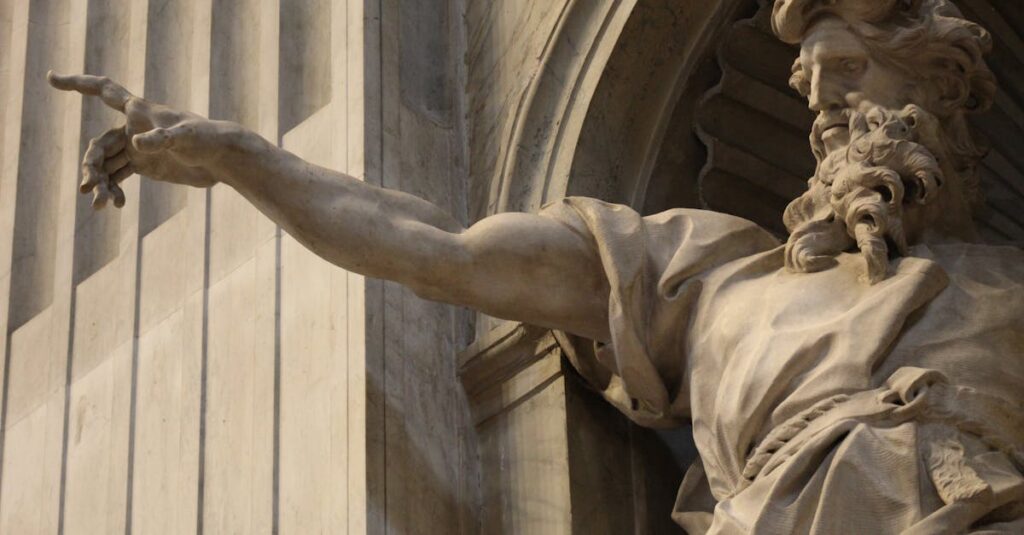
Few names in the Bible carry as much weight and meaning as Moses. His life is not just a story, it is a journey of transformation, faith, struggle, and divine purpose.
From being a helpless baby in a basket to becoming the leader who confronted kings and parted seas, Moses represents what happens when God uses an ordinary person for extraordinary purposes.
This article will walk you through his life in detail so you can understand not just who Moses was, but why his story still speaks powerfully today.
Background: The Birth of Moses
Moses was born during a time of fear and oppression. The Israelites were living as slaves in Egypt, and Pharaoh saw them as a threat.
To control their population, Pharaoh ordered that all Hebrew baby boys be killed. In the middle of this crisis, Moses’ mother chose faith over fear.
She hid him for three months and then placed him in a basket on the Nile River. In God’s perfect plan, the child was discovered by Pharaoh’s daughter, who adopted him.
His story begins in the book of Exodus, showing us that even from birth, God was protecting and preparing him.
Growing Up Between Two Identities
Moses grew up in Pharaoh’s palace with privilege, education, and power. Yet deep inside, he knew he was not Egyptian.
He was a Hebrew, part of a people suffering under slavery.
This inner conflict shaped his identity. It also prepared him for his future role. Moses understood both worlds, the power of Egypt and the pain of Israel.
One day, this tension exploded. When he saw an Egyptian beating a Hebrew slave, he killed the Egyptian in anger.
This moment changed his life forever.
The Wilderness Years: Preparation in Silence
After killing the Egyptian, Moses fled to Midian to escape punishment. What looked like failure was actually preparation.
In Midian, he became a shepherd. He lived a quiet, hidden life for 40 years.
These years were not wasted. God was shaping his character:
- Teaching patience
- Building humility
- Removing pride from palace life
Sometimes God prepares us in silence before calling us into purpose.
The Burning Bush: Moses’ Divine Calling
Everything changed when Moses encountered God in the burning bush.
God spoke to him and revealed His plan: Moses would return to Egypt and lead the Israelites out of slavery.
Moses doubted himself. He questioned his ability, his speech, and even God’s plan.
But God responded with assurance, not rejection.
This moment teaches us something powerful: God does not call the qualified, He qualifies the called.
Confronting Pharaoh and the Ten Plagues
Moses returned to Egypt with his brother Aaron and stood before Pharaoh with a bold message: “Let my people go.”
Pharaoh refused.
What followed were the Ten Plagues, a series of divine judgments that displayed God’s power over Egypt’s gods and systems.
Each plague increased in intensity until Pharaoh finally allowed the Israelites to leave.
This was not just a political event. It was a spiritual demonstration of God’s authority.
The Exodus and the Red Sea Miracle
The Israelites left Egypt, but their journey to freedom was not easy.
When Pharaoh changed his mind and pursued them, the people found themselves trapped between the Egyptian army and the Red Sea.
In one of the most dramatic moments in Scripture, God parted the sea through Moses.
The Israelites walked through on dry ground, and their enemies were defeated.
This event defined Moses as a leader and showed that God makes a way even when there seems to be none.
Mount Sinai and the Ten Commandments
After their escape, Moses led the Israelites to Mount Sinai.
Here, he received God’s law, including the Ten Commandments, recorded in Exodus and Deuteronomy.
These commandments were not just rules. They were a covenant, a relationship between God and His people.
They shaped morality, justice, and worship for generations.
Challenges in Leadership: A Burdened Leader
Leading the Israelites was not easy.
They complained about food, water, leadership, and even longed to return to Egypt.
Moses often stood between God and the people, interceding for them.
At times, the pressure overwhelmed him. Yet he continued to lead with faith.
His journey shows that leadership is not about comfort, it is about responsibility, sacrifice, and perseverance.
Moses’ Mistake and Its Consequence
Despite his faithfulness, Moses was not perfect.
In a moment of frustration, he disobeyed God by striking a rock instead of speaking to it as instructed.
Because of this, God told him he would not enter the Promised Land.
This moment is sobering. Even great leaders face consequences for disobedience.
The Final Days of Moses
Near the end of his life, Moses viewed the Promised Land from a distance.
Though he did not enter it, he fulfilled his mission, leading God’s people to the edge of their destiny.
His story spans multiple books: Genesis, Exodus, Leviticus, Numbers, and Deuteronomy.
His death marked the end of an era, but his influence never ended.
The Legacy of Moses
Moses is remembered as:
- A prophet who spoke directly with God
- A deliverer who freed a nation
- A lawgiver who established God’s commandments
- A leader who endured trials and remained faithful
His life laid the foundation for Israel’s identity and faith.
Spiritual Lessons from Moses’ Life
1. God Uses Broken People
Moses had doubts, fears, and failures. Yet God still used him.
2. Obedience Is Greater Than Ability
God wasn’t looking for perfection. He was looking for obedience.
3. Faith Requires Courage
Standing before Pharaoh took boldness. Faith often requires stepping into fear.
4. Leadership Is Service
Moses served people who often misunderstood him. True leadership is sacrificial.
5. God’s Timing Is Perfect
Moses waited 40 years before stepping into his calling. God is never late.
Why Moses Still Matters Today
Moses’ story is not just history. It is a mirror.
It reminds us that:
- God sees us even in hidden places
- Our past does not disqualify us
- Purpose often comes through struggle
His life speaks to anyone who feels unqualified, uncertain, or overwhelmed.
Conclusion
Moses’ journey from the Nile River to Mount Sinai is one of the most powerful stories in the Bible.
He was not perfect, but he was faithful.
And through his obedience, God changed the course of history.