
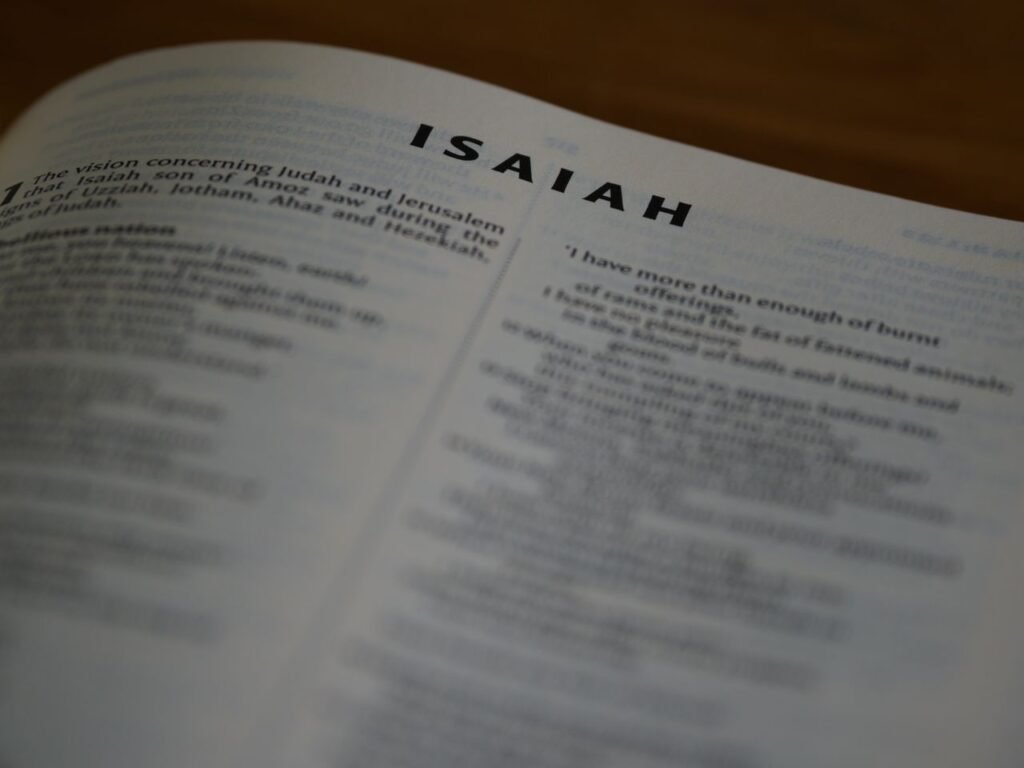
Long before Jesus was born in Bethlehem, the prophet Isaiah spoke about a coming child who would bring hope, peace, and salvation to the world.
His words were written centuries before the birth of Christ, yet they remain among the most significant passages Christians read during the Christmas season. Isaiah spoke of a miraculous birth, a promised Son, a righteous King, and a coming Servant who would bring God’s light to a world living in darkness.
These prophecies reveal an important part of the biblical story: the birth of Jesus was not an isolated event. It was connected to promises God had been revealing throughout the history of Israel.
From the famous prophecy of Immanuel to the promise of a child called the Prince of Peace, Isaiah’s writings offer a remarkable picture of the Messiah.
In this article, we will explore seven important prophecies of Isaiah about the birth of Jesus, their biblical meanings, and how Christians understand their fulfillment in the New Testament.
1. Isaiah 7:14 – The Prophecy of Immanuel
The Prophecy
“Therefore the Lord himself shall give you a sign; Behold, a virgin shall conceive, and bear a son, and shall call his name Immanuel.” (Isaiah 7:14, KJV)
This is perhaps the most famous prophecy in Isaiah concerning the birth of Jesus.
The prophecy was delivered during the reign of King Ahaz of Judah. At the time, the kingdom was facing a serious political threat from surrounding nations. King Ahaz was frightened, and the people were uncertain about their future.
Through Isaiah, God offered a sign that would remind His people of His presence and faithfulness.
The sign involved the birth of a child who would be called Immanuel.
The name Immanuel means “God with us.”
Christians understand this prophecy as ultimately pointing to the miraculous birth of Jesus Christ. Matthew 1:22-23 directly connects Isaiah’s words with the birth of Jesus through Mary.
New Testament Fulfillment: Matthew 1:22-23
“Behold, a virgin shall be with child, and shall bring forth a son, and they shall call his name Emmanuel, which being interpreted is, God with us.” (KJV)
The significance of this prophecy goes beyond the circumstances of Jesus’ birth. It reveals the heart of the Christian message: God came near to humanity through His Son.
Jesus did not remain distant from human suffering. He entered the world, lived among people, and revealed God’s love.
2. Isaiah 9:6 – A Child Will Be Born and Called the Prince of Peace
The Prophecy
“For unto us a child is born, unto us a son is given: and the government shall be upon his shoulder: and his name shall be called Wonderful, Counsellor, The mighty God, The everlasting Father, The Prince of Peace.” (Isaiah 9:6, KJV)
Isaiah 9:6 is one of the most beloved Old Testament passages associated with Christmas.
The prophet describes a child whose birth would bring hope to God’s people. However, this would not be an ordinary child or an ordinary king.
The titles given to Him reveal extraordinary authority and character.
- Wonderful Counsellor: He possesses perfect wisdom and guidance.
- The Mighty God: His identity is associated with divine power.
- The Everlasting Father: He represents everlasting care and authority.
- The Prince of Peace: His kingdom brings lasting peace.
Christians understand this promised child as Jesus Christ.
The prophecy also reveals that the Messiah’s kingdom would be different from earthly kingdoms. Human rulers rise and fall, but the kingdom associated with Jesus is understood as everlasting.
New Testament Connection: Luke 2:11
“For unto you is born this day in the city of David a Saviour, which is Christ the Lord.” (KJV)
The announcement of Jesus’ birth to the shepherds echoes the promise of a Savior who would bring hope to the world.
Isaiah’s words remind us that Christmas celebrates more than the birth of a child. It celebrates the coming of the promised King.
3. Isaiah 11:1 – The Messiah Will Come From the Family of Jesse
The Prophecy
“And there shall come forth a rod out of the stem of Jesse, and a Branch shall grow out of his roots.” (Isaiah 11:1, KJV)
Jesse was the father of King David. Through this prophecy, Isaiah describes a future ruler who would emerge from David’s family line.
The imagery is particularly beautiful.
A tree that has been cut down may appear lifeless, but a small branch can still grow from its roots. Isaiah uses this picture to communicate hope and restoration.
Even when the royal family of David appeared weak or threatened, God’s promise had not disappeared.
The Messiah would come from this family.
Jesus is identified in the New Testament as the Son of David, connecting Him with the royal lineage promised in the Old Testament.
New Testament Connection: Romans 15:12
“There shall be a root of Jesse, and he that shall rise to reign over the Gentiles; in him shall the Gentiles trust.” (KJV)
This passage connects the promise concerning Jesse’s family with the hope that the Messiah would bring to the nations.
The prophecy reminds us that God’s promises do not disappear simply because circumstances look hopeless.
4. Isaiah 11:2 – The Spirit of the Lord Will Rest Upon Him
The Prophecy
“And the spirit of the LORD shall rest upon him, the spirit of wisdom and understanding, the spirit of counsel and might, the spirit of knowledge and of the fear of the LORD.” (Isaiah 11:2, KJV)
Isaiah continues describing the coming ruler from Jesse’s family.
This time, the prophet focuses on the character and spiritual authority of the Messiah.
The coming King would be filled with the Spirit of the Lord. He would possess wisdom, understanding, counsel, strength, knowledge, and reverence for God.
These qualities distinguish Him from ordinary rulers.
Jesus’ ministry reflects many of these characteristics. He taught with authority, demonstrated wisdom, showed compassion, and remained obedient to the Father.
New Testament Connection: Luke 4:18
“The Spirit of the Lord is upon me, because he hath anointed me to preach the gospel to the poor.” (KJV)
Jesus uses this passage from Isaiah in the synagogue at Nazareth to describe His mission.
Although Isaiah 11:2 is not a direct prediction of the date or circumstances of Jesus’ birth, it forms part of the larger messianic portrait of the promised King.
It tells us that the Messiah would come not through human power alone but through the Spirit of God.
5. Isaiah 42:1 – God’s Chosen Servant Will Bring Justice
The Prophecy
“Behold my servant, whom I uphold; mine elect, in whom my soul delighteth; I have put my spirit upon him: he shall bring forth judgment to the Gentiles.” (Isaiah 42:1, KJV)
Isaiah introduces a servant chosen and supported by God.
Unlike earthly rulers who often seek power through force, this servant would bring justice through God’s Spirit.
The passage describes a Messiah whose mission would extend beyond Israel and reach the nations.
This is important because the promise of Jesus was never intended to be limited to one people or one place.
New Testament Connection: Matthew 12:17-18
Matthew connects this passage from Isaiah with the ministry of Jesus.
Jesus demonstrated the qualities described by the prophet. He reached out to the vulnerable, healed the suffering, and brought hope to those who were overlooked.
Isaiah’s prophecy helps us understand the nature of the Messiah. He would be powerful, yet gentle; authoritative, yet compassionate.
6. Isaiah 49:6 – The Messiah Will Be a Light to the Nations
The Prophecy
“I will also give thee for a light to the Gentiles, that thou mayest be my salvation unto the end of the earth.” (Isaiah 49:6, KJV)
One of the remarkable themes in Isaiah’s writings is that God’s salvation would eventually reach far beyond the borders of Israel.
In this passage, the servant is given a mission that extends to the ends of the earth.
He would become a light to the Gentiles and bring God’s salvation to the nations.
Christians understand this as part of the messianic mission fulfilled through Jesus Christ.
Jesus came into a world filled with spiritual darkness and offered the hope of salvation to all who would believe in Him.
New Testament Connection: Luke 2:30-32
When Simeon sees the infant Jesus in the temple, he praises God and recognizes Him as the promised salvation.
He describes Jesus as:
“A light to lighten the Gentiles, and the glory of thy people Israel.” (Luke 2:32, KJV)
The connection is especially meaningful. Even when Jesus was still an infant, His mission to bring salvation to the nations was being recognized.
7. Isaiah 53:2 – The Messiah Will Come in Humility
The Prophecy
“For he shall grow up before him as a tender plant, and as a root out of a dry ground.” (Isaiah 53:2, KJV)
Isaiah 53 is primarily known for its description of the suffering Servant.
Although this passage does not directly describe the circumstances of Jesus’ birth, it offers an important picture of the humble appearance and life of the coming Messiah.
The servant is compared to a tender plant growing in dry ground.
There is no outward display of earthly power or royal magnificence. His appearance does not attract people through wealth or worldly status.
This image reflects the humble circumstances surrounding Jesus’ earthly life.
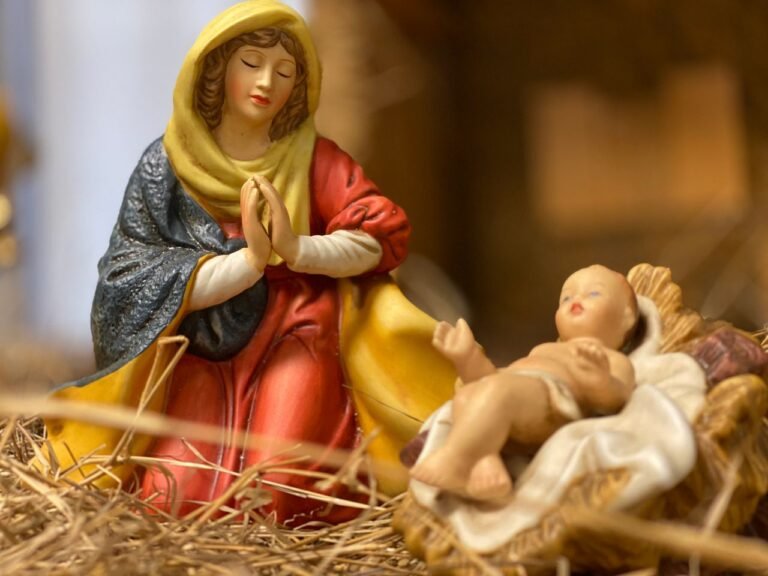
He was born in Bethlehem, placed in a manger, and raised in an ordinary family.
Yet Christians believe that this humble beginning was part of God’s extraordinary plan of salvation.
New Testament Connection: Philippians 2:7-8
Paul describes Jesus as taking the form of a servant and humbling Himself.
The passage connects beautifully with Isaiah’s description of the suffering Servant.
The Messiah would not come seeking earthly glory. His mission would ultimately involve sacrifice, obedience, and love.
How Did Isaiah Predict the Coming of Jesus?
Isaiah’s prophecies do not all describe the same aspect of the Messiah.
Instead, they present different parts of His identity and mission.
Some passages describe His birth and name. Others reveal His family lineage, character, kingdom, and purpose.
Here is a quick overview:
| Isaiah’s prophecy | What it describes | New Testament connection |
|---|---|---|
| Isaiah 7:14 | The birth of Immanuel | Matthew 1:22-23 |
| Isaiah 9:6 | The promised child and Prince of Peace | Luke 2:11 |
| Isaiah 11:1 | The Messiah from Jesse’s family | Romans 15:12 |
| Isaiah 11:2 | The Spirit-filled Messiah | Luke 4:18 |
| Isaiah 42:1 | God’s chosen Servant | Matthew 12:17-18 |
| Isaiah 49:6 | A light to the nations | Luke 2:30-32 |
| Isaiah 53:2 | The humble suffering Servant | Philippians 2:7-8 |
Together, these passages provide a broader understanding of the Messiah Christians recognize in Jesus.
Why Are Isaiah’s Prophecies Important to the Christmas Story?
The prophecies of Isaiah are especially important during Christmas because they help explain why the birth of Jesus matters.
Christmas is not simply the celebration of a historical birth. It is the celebration of God’s promise coming into the world.
There are three important lessons we can take from Isaiah’s writings.
1. God Keeps His Promises
Isaiah spoke during difficult times in Israel’s history. His messages reminded people that God had not forgotten His promises.
The birth of Jesus is understood by Christians as the fulfillment of the long-awaited hope of a Messiah.
2. God’s Salvation Is for All People
Isaiah repeatedly speaks about the nations receiving God’s light and salvation.
The coming of Jesus opened the promise of redemption to people beyond Israel.
His message continues to reach people from every nation, language, and background.
3. The Messiah Came to Bring Peace and Salvation
Isaiah describes a ruler whose kingdom would be characterized by righteousness and peace.
Jesus came to offer forgiveness, reconciliation, and the hope of eternal life.
His birth marks the beginning of the earthly life through which Christians believe God’s plan of salvation was revealed.
Frequently Asked Questions About Isaiah’s Prophecies of Jesus
1. What did Isaiah prophesy about the birth of Jesus?
Isaiah prophesied about a child who would be born of a virgin and called Immanuel (Isaiah 7:14). He also described a promised Son who would be called Wonderful Counsellor, Mighty God, Everlasting Father, and Prince of Peace (Isaiah 9:6). Christians understand these passages as pointing toward Jesus Christ.
2. How many prophecies about Jesus are in the Book of Isaiah?
There is no universally agreed number. However, several major passages in Isaiah are traditionally understood by Christians as messianic prophecies. These include Isaiah 7:14, 9:6-7, 11:1-2, 42:1, 49:6, and chapters 52-53.
3. How many years before Jesus was born did Isaiah prophesy?
Isaiah’s ministry is generally dated to the eighth century BC, approximately 700 years before the birth of Jesus. His prophecies were therefore recorded centuries before the events described in the New Testament.
4. What does Immanuel mean in Isaiah 7:14?
Immanuel means “God with us.” The name expresses God’s presence among His people. Matthew 1:23 connects Isaiah’s prophecy with the birth of Jesus Christ.
5. What is the most famous prophecy of Isaiah about Jesus?
Isaiah 7:14 is one of the most famous prophecies because it describes the birth of a child called Immanuel. Isaiah 9:6 is another well-known passage because it describes a child who would be called the Prince of Peace and the Mighty God.
6. Is Isaiah 53 about Jesus?
Christians have traditionally understood Isaiah 52:13-53:12 as a prophecy about the suffering Messiah. The passage describes a servant who is rejected, wounded, and bears the sins of others. The New Testament connects this imagery with the suffering and sacrifice of Jesus.
Final Thoughts: Isaiah’s Promise of a Coming Savior
The words of Isaiah remind us that the story of Jesus began long before the night He was born in Bethlehem.
Through the promises of Immanuel, the Prince of Peace, and the suffering Servant, Isaiah offered a picture of the Messiah who would one day come to bring hope and salvation.
His prophecies remind us that God’s plans often unfold across generations. What may appear distant or impossible to humanity is never beyond God’s power.
As Christmas approaches, take a moment to read these passages slowly. Reflect on the child promised in Isaiah 9:6, the Immanuel of Isaiah 7:14, and the light who would reach the nations.
For Christians, these ancient words point toward one extraordinary truth:
The promised Savior came. His name is Jesus Christ.
Read More:
The Meaning of Emmanuel: Bible Verses About God With Uss
25 Bible Verses About John the Baptist and Preparing the Way
The Magnificat: Mary’s Song in the Bible and Its Meaning
The Benedictus: Zechariah’s Song in the Bible and Its Meaning