
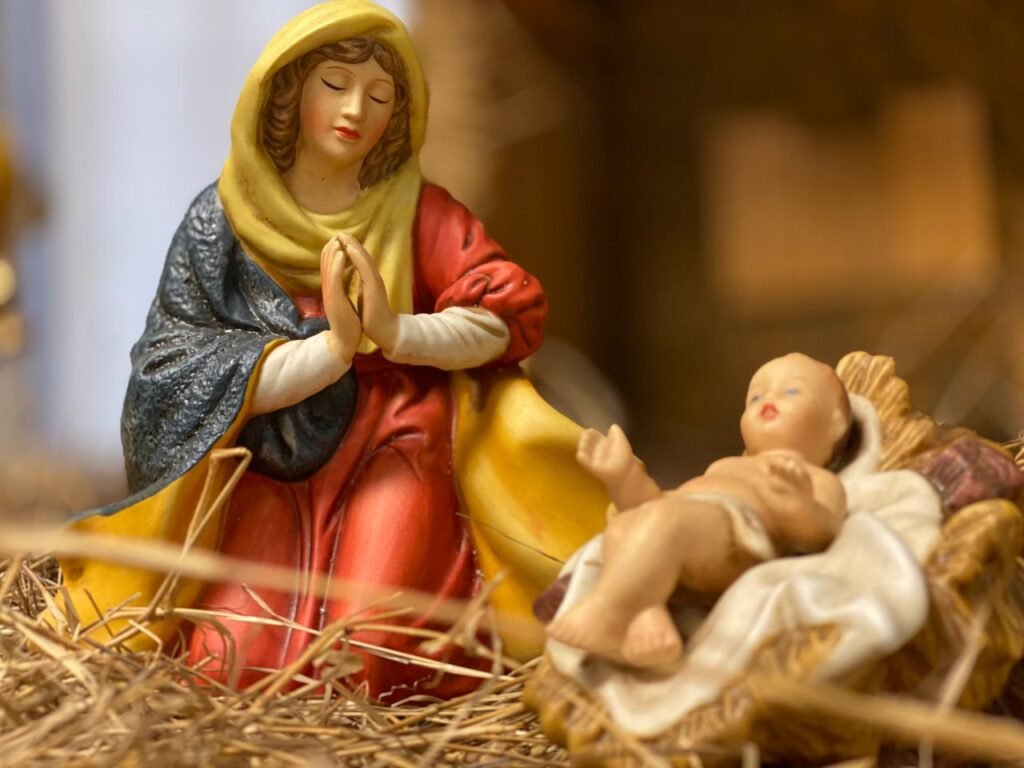
When Mary learned that she would give birth to Jesus, she responded with one of the most beautiful expressions of praise found in the Bible.
Her words were not filled with fear or uncertainty. Instead, they overflowed with gratitude, humility, faith, and joy. She praised God for choosing her, remembered His mercy toward generations of believers, and celebrated the promise that He would lift up the humble and bring down the proud.
This beautiful passage is known as the Magnificat, or Mary’s Song of Praise.
Recorded in Luke 1:46-55, the Magnificat is one of the most important passages in the Christmas story. It reveals Mary’s understanding of God’s character and shows how the coming of Jesus would change the world.
The song is also a powerful reminder that God sees the humble, remembers His promises, and shows mercy to those who trust Him.
In this article, we will explore the Magnificat in the Bible, read Mary’s complete song, examine its meaning verse by verse, and discover the important lessons it offers Christians today.
What Is the Magnificat in the Bible?
The Magnificat is the song of praise spoken by Mary after she visits her relative Elizabeth.
The name Magnificat comes from the Latin word meaning “magnifies.” It comes from the opening words of Mary’s song:
“My soul doth magnify the Lord.”
The song is recorded in Luke 1:46-55 and is traditionally known as Mary’s hymn of praise.
In this passage, Mary praises God for His goodness, mercy, power, and faithfulness. She recognizes that although she is a humble servant, God has chosen her for an extraordinary purpose.
The Magnificat is especially significant because it appears shortly after the angel Gabriel announces that Mary will give birth to Jesus.
Rather than focusing on her own importance, Mary directs all attention toward God.
Her song celebrates a God who remembers His promises, cares for the humble, and brings salvation to His people.
The Magnificat: Mary’s Complete Song of Praise (Luke 1:46-55)
Here is the complete Magnificat from the King James Version of the Bible.
Luke 1:46-55 (KJV)
Verse 46:
“And Mary said, My soul doth magnify the Lord,”
Verse 47:
“And my spirit hath rejoiced in God my Saviour.”
Verse 48:
“For he hath regarded the low estate of his handmaiden: for, behold, from henceforth all generations shall call me blessed.”
Verse 49:
“For he that is mighty hath done to me great things; and holy is his name.”
Verse 50:
“And his mercy is on them that fear him from generation to generation.”
Verse 51:
“He hath shewed strength with his arm; he hath scattered the proud in the imagination of their hearts.”
Verse 52:
“He hath put down the mighty from their seats, and exalted them of low degree.”
Verse 53:
“He hath filled the hungry with good things; and the rich he hath sent empty away.”
Verse 54:
“He hath holpen his servant Israel, in remembrance of his mercy;”
Verse 55:
“As he spake to our fathers, to Abraham, and to his seed for ever.”
Why Did Mary Sing the Magnificat?
To understand Mary’s song, we must first understand what happened before it.
In Luke 1, the angel Gabriel appears to Mary and tells her that she will conceive and give birth to a son named Jesus.
He explains that her child will be great and will be called the Son of the Highest.
Mary is initially troubled by the announcement, but she responds with faith and obedience.
She then travels to visit Elizabeth, who is also expecting a child. When Mary greets her, Elizabeth’s baby leaps in her womb, and Elizabeth is filled with the Holy Spirit.
Elizabeth recognizes the extraordinary blessing upon Mary and praises her for believing God’s promise.
Mary responds with the words that become known as the Magnificat.
Her song is an expression of gratitude and worship. She recognizes that God has chosen her, but she also understands that the child she carries represents the fulfillment of God’s promises to Israel.
Her response is not simply personal happiness. It is praise for the salvation God is bringing into the world.
Understanding the Meaning of the Magnificat: 7 Important Lessons
Mary’s song contains several important spiritual truths. Each section reveals something about God’s character and His relationship with humanity.
1. Luke 1:46-47 – True Joy Begins With Praising God
“My soul doth magnify the Lord, And my spirit hath rejoiced in God my Saviour.”
Mary begins her song by directing her attention toward God.
She does not begin by celebrating her own importance or speaking about the extraordinary position she has been given.
Instead, she magnifies the Lord.
The word magnify means to make something greater or more visible. Mary is not suggesting that God needs to become greater. She is expressing her desire to make His greatness known through her praise.
Her joy comes from God, whom she recognizes as her Savior.
The lesson: Our circumstances may change, but our reason to praise God remains. Mary’s example reminds us to look beyond our situations and recognize the goodness of the One who guides our lives.
2. Luke 1:48 – God Sees the Humble
“For he hath regarded the low estate of his handmaiden: for, behold, from henceforth all generations shall call me blessed.”
Mary recognizes that God has noticed her humble position.
She was not a wealthy ruler, a powerful religious leader, or someone with great political influence. She was a young woman from an ordinary family.
Yet God chose her for an extraordinary purpose.
Mary understands that generations will remember her not because of her worldly position but because of what God has done through her.
This verse reminds us that God does not measure people according to wealth, status, or social recognition.
The lesson: Never believe that your humble circumstances make you insignificant. God sees those whom the world may overlook.
3. Luke 1:49 – God’s Power Is Revealed Through His Great Works
“For he that is mighty hath done to me great things; and holy is his name.”
Mary acknowledges that the great things happening in her life are the work of God.
She does not take personal credit for the miracle. She recognizes God’s power and holiness.
The birth of Jesus would become the greatest expression of God’s saving work in human history, according to the Christian faith.
Mary’s words show that she understands the significance of what God is doing.
The lesson: When something wonderful happens in our lives, we should remember to give thanks to God. Every blessing is an opportunity to recognize His goodness.
4. Luke 1:50 – God’s Mercy Continues From Generation to Generation
“And his mercy is on them that fear him from generation to generation.”
Mary moves from describing what God has done for her to celebrating His mercy toward all generations.
The phrase “fear him” refers to reverence, respect, and faithful devotion toward God.
His mercy is not limited to one person or one period in history.
It continues from generation to generation.
This verse also connects Mary’s song with the wider story of God’s relationship with Israel, where His mercy and faithfulness appear repeatedly.
The lesson: God’s mercy is not temporary. His faithfulness continues, and those who sincerely seek Him can find hope in His promises.
5. Luke 1:51-52 – God Brings Down the Proud and Lifts Up the Humble
“He hath shewed strength with his arm; he hath scattered the proud in the imagination of their hearts.”
“He hath put down the mighty from their seats, and exalted them of low degree.”
These verses reveal an important theme of the Magnificat: God’s kingdom turns ordinary expectations upside down.
The proud believe they are powerful because of their position. The mighty believe their authority will last forever.
But Mary reminds us that human power is temporary.
God sees beyond outward appearances and recognizes the condition of the human heart.
Those who exalt themselves may be brought low, while those who remain humble can be lifted up by His grace.
The lesson: Humility matters more than worldly status. God values a sincere heart rather than pride, arrogance, and the desire for recognition.
6. Luke 1:53 – God Cares for the Hungry and Needy
“He hath filled the hungry with good things; and the rich he hath sent empty away.”
Mary continues describing God’s concern for those who are struggling.
The hungry represent people who are in need and depend on God’s provision.
The verse also challenges those who place their confidence entirely in material wealth.
It is not simply a condemnation of everyone who possesses riches. Rather, it highlights God’s opposition to pride, injustice, and the false security that comes from worldly possessions.
The kingdom of God values compassion, generosity, and justice.
The lesson: We should never become so focused on gaining wealth that we forget those who are struggling. A life of faith should include generosity and concern for others.
7. Luke 1:54-55 – God Remembers His Promises
“He hath holpen his servant Israel, in remembrance of his mercy;”
“As he spake to our fathers, to Abraham, and to his seed for ever.”
Mary concludes her song by looking back at God’s promises to Israel.
She remembers the covenant made with Abraham and recognizes that God has not forgotten His people.
The coming of Jesus is connected with this long history of divine faithfulness.
God’s promises were not abandoned, even after generations had passed.
For Christians, the birth of Jesus represents the fulfillment of God’s saving plan and the continuation of His promises.
The lesson: God’s timing may be different from ours, but His faithfulness remains. We can trust Him even when we cannot yet see how His promises will unfold.
What Is the Main Message of the Magnificat?
The central message of Mary’s song is that God is faithful, merciful, powerful, and attentive to the humble.
The Magnificat celebrates a God who does not judge people according to worldly standards.
He sees the forgotten, lifts up the lowly, provides for those in need, and remembers His promises.
It also announces that something extraordinary is happening through the birth of Jesus.
The Messiah would bring salvation and reveal God’s kingdom in a way that challenged the pride and power of the world.
Mary’s song is therefore both personal and universal.
It begins with her own experience of God’s goodness but expands into a celebration of His faithfulness toward all generations.
What Makes the Magnificat Important During Advent and Christmas?
The Magnificat is especially meaningful during Advent because it helps us understand the spiritual significance of Jesus’ coming.
Advent is a season of waiting, hope, preparation, and reflection.
Mary’s song brings all these themes together.
It teaches us to wait with faith.
Mary trusted God’s promise even though she could not fully understand everything that would happen.
It reminds us to celebrate God’s mercy.
The birth of Jesus is understood as an expression of God’s love and His desire to bring salvation to humanity.
It encourages humility.
Mary recognizes that God has chosen her despite her humble position. Her response reminds us to approach Him with gratitude rather than pride.
It gives hope to those who are struggling.
The Magnificat speaks about the hungry being filled and the humble being lifted up. It reminds us that God sees those who are suffering.
Reading Luke 1:46-55 during Advent is a beautiful way to reflect on the meaning of Christmas before celebrating the birth of Christ.
5 Bible Verses That Connect With Mary’s Song
The Magnificat echoes several important themes found throughout the Old Testament and New Testament.
Here are five additional Bible passages worth reading alongside Mary’s song.
1. 1 Samuel 2:1-2 – Hannah’s Prayer of Praise
“My heart rejoiceth in the LORD, mine horn is exalted in the LORD.” (KJV)
Hannah’s prayer shares several themes with Mary’s song, including gratitude, God’s power, and the lifting up of the humble.
2. Psalm 103:17 – God’s Mercy Endures Forever
“But the mercy of the LORD is from everlasting to everlasting upon them that fear him.” (KJV)
This verse echoes Mary’s declaration that God’s mercy continues from generation to generation.
3. Psalm 107:9 – God Satisfies the Hungry
“For he satisfieth the longing soul, and filleth the hungry soul with goodness.” (KJV)
This passage connects with Mary’s words about God filling the hungry with good things.
4. Psalm 98:3 – God Remembers His Mercy
“He hath remembered his mercy and his truth toward the house of Israel.” (KJV)
This verse reflects Mary’s celebration of God’s faithfulness to Israel.
5. Galatians 4:4-5 – God Sends His Son
“But when the fulness of the time was come, God sent forth his Son, made of a woman, made under the law.” (KJV)
This passage connects the coming of Jesus with God’s plan of redemption.
A Short Prayer Inspired by the Magnificat
Heavenly Father,
My soul praises You for Your goodness, mercy, and faithfulness.
Thank You for seeing me even when I feel small or forgotten. Teach me to walk with humility, trust Your promises, and recognize Your blessings in every season.
Fill my heart with gratitude and help me show kindness to those who are struggling.
As I remember the birth of Jesus, help me understand the depth of Your love and the beauty of Your salvation.
May my life bring glory to Your name.
In Jesus’ name, Amen.
Frequently Asked Questions About the Magnificat
1. What is the Magnificat in the Bible?
The Magnificat is Mary’s song of praise recorded in Luke 1:46-55. It celebrates God’s mercy, power, faithfulness, and promise of salvation through the coming of Jesus Christ.
2. Why is Mary’s song called the Magnificat?
The name comes from the Latin word Magnificat, meaning “magnifies.” It refers to the opening words of the song: “My soul doth magnify the Lord.”
3. Where is the Magnificat found in the Bible?
The Magnificat is found in Luke 1:46-55. Mary speaks these words after visiting Elizabeth, who recognizes the blessing of Mary’s pregnancy.
4. What is the main theme of the Magnificat?
The main theme is God’s faithfulness and mercy. Mary praises God for choosing the humble, lifting up the lowly, providing for the needy, and remembering His promises to Israel.
5. Who did Mary sing the Magnificat to?
According to Luke 1:39-56, Mary visits Elizabeth, and the Magnificat follows Elizabeth’s greeting and blessing. The passage does not explicitly identify a human audience for Mary’s song. It is presented as her response of praise to God.
6. What is the connection between the Magnificat and Hannah’s prayer?
Mary’s song shares several themes with Hannah’s prayer in 1 Samuel 2:1-10. Both women praise God for His power, celebrate His faithfulness, and recognize how He lifts up the humble and brings down the proud.
7. Why is the Magnificat important during Christmas?
The Magnificat celebrates God’s faithfulness and the coming of Jesus. It reminds Christians that the birth of Christ is part of God’s long-promised plan of salvation and encourages believers to approach Christmas with humility, gratitude, and faith.
Final Reflection: Let Your Soul Magnify the Lord
Mary’s song is a beautiful reminder that true worship begins with recognizing who God is.
She did not allow her humble circumstances to define her worth. Instead, she recognized God’s goodness and trusted the extraordinary plan He had placed before her.
Her words remind us that God sees the humble, remembers His promises, and shows mercy from generation to generation.
As you read the Magnificat during this Christmas season, take a moment to reflect on its message.
Are you grateful for what God has done? Do you trust His promises even when the future is uncertain? Are you willing to walk with the humility and faith that Mary demonstrated?
The Magnificat invites us to look beyond ourselves and recognize the greatness of God.
“My soul doth magnify the Lord, And my spirit hath rejoiced in God my Saviour.” — Luke 1:46-47 (KJV)
May these words become more than a passage we read. May they become an expression of gratitude that lives in our hearts throughout the year.
Read More:
The Meaning of Emmanuel: Bible Verses About God With Us
7 Prophecies of Isaiah About the Birth of Jesus
25 Bible Verses About John the Baptist and Preparing the Way
The Benedictus: Zechariah’s Song in the Bible and Its Meaning