

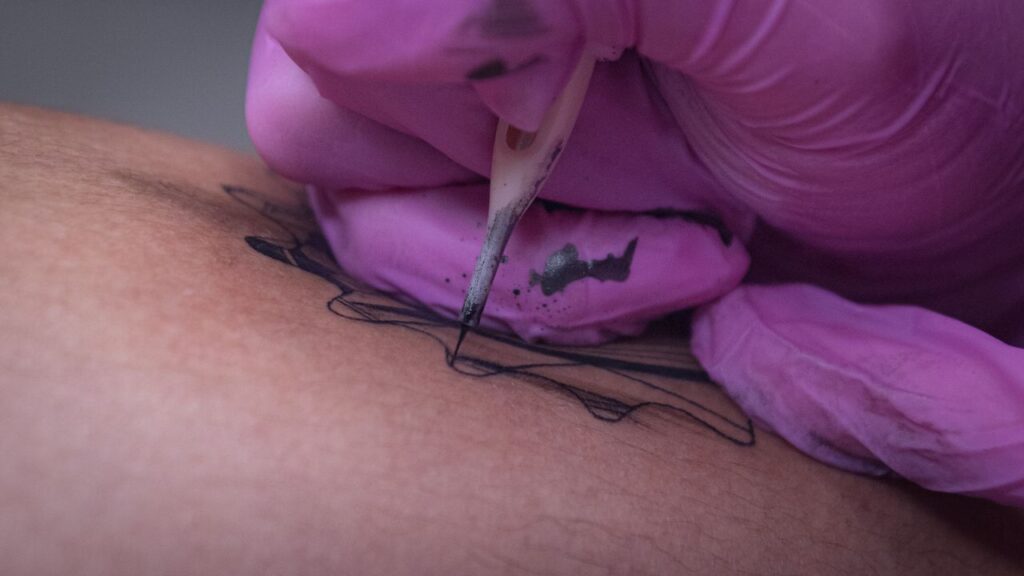
Tattoos have become increasingly common, including among Christians. Some people get tattoos to remember a loved one, express their faith, or mark an important moment in their lives. Others wonder whether Are Tattoos a Sin According to the Bible goes against God’s Word.
So, are tattoos a sin according to the Bible?
The answer is not simply yes or no. Are Tattoos a Sin According to the Bible? A Bible verse mentions tattoos, but understanding its meaning requires historical context. It also depends on the teachings of Jesus and broader biblical principles guiding decisions today.
Let’s explore what Scripture says about tattoos and how Christians can approach this question with wisdom and faith.
What Does the Bible Say About Tattoos?
The most frequently quoted Bible verse about tattoos is found in Leviticus.
Leviticus 19:28 (KJV) says:
“Ye shall not make any cuttings in your flesh for the dead, nor print any marks upon you: I am the LORD.”
At first glance, this verse appears to prohibit tattoos. However, understanding the original context is important before applying it directly to modern tattoo practices.
Understanding Leviticus 19:28
Leviticus was part of the law given to ancient Israel. The surrounding passages address various practices that distinguished the Israelites from the surrounding nations.
Leviticus 19:28 specifically mentions cutting the flesh for the dead and marking the body. These practices are commonly understood in connection with ancient mourning rituals and religious customs.
Some Christians believe this verse establishes a continuing prohibition against tattoos. Others believe the command addressed specific practices in ancient Israel rather than every form of modern body art.
Christians also differ on how Old Testament laws apply under the new covenant established through Jesus Christ.
Therefore, Leviticus 19:28 is central to the discussion, but Christians interpret its application differently.
Does the Bible Clearly Say That All Tattoos Are Sinful?
The Bible does not explicitly discuss modern tattoos in the way people commonly get them today.
There is no New Testament verse that directly states that every tattoo is sinful. Yet, Are Tattoos a Sin According to the Bible, the absence of a specific prohibition does not automatically mean that every tattoo is appropriate for a Christian.
Instead, Christians can consider several biblical principles:
- The purpose of the tattoo: Why do you want it?
- The message it communicates: Does it reflect values consistent with your faith?
- Your conscience: Can you make this decision with a clear conscience before God?
- Your motivation: Is the decision driven by personal meaning, pressure, pride, rebellion, or another motive?
- Your treatment of your body: Are you making a thoughtful decision rather than acting impulsively?
These principles can help believers evaluate a tattoo beyond simply asking whether it is permitted.
What Does the New Testament Say About Tattoos?
Although the New Testament does not directly address modern tattoos, several passages offer principles that Christians can apply to decisions about their bodies.
1. Your Body Is a Temple of the Holy Spirit
1 Corinthians 6:19-20 (KJV) says:
“What? know ye not that your body is the temple of the Holy Ghost which is in you, which ye have of God, and ye are not your own?”
Paul reminds Christians that their bodies belong to God and should be treated with respect.
Some Christians interpret this passage as a reason to avoid tattoos, believing that permanently marking the body is inconsistent with honoring God’s creation.
Others point out that the passage appears in a discussion about sexual immorality and does not specifically address tattoos.
The broader principle remains important: Christians should consider whether their choices honor God and reflect responsible care for their bodies.
2. Do Everything for the Glory of God
1 Corinthians 10:31 (KJV) says:
“Whether therefore ye eat, or drink, or whatsoever ye do, do all to the glory of God.”
This verse encourages believers to consider whether their decisions honor God.
For example, a Christian might consider a tattoo featuring a Bible verse, a cross, or a meaningful reminder of God’s faithfulness.
However, a religious design does not automatically make every decision wise. The motivation, message, and circumstances still matter.
Likewise, a tattoo without an explicitly religious design is not automatically sinful simply because it does not display Christian symbols.
The question is whether the decision can be made in a way that reflects a sincere desire to honor God.
3. Do Not Act Against Your Conscience
Romans 14:23 (KJV) says:
“For whatsoever is not of faith is sin.”
Romans 14 discusses disagreements among believers over matters of conscience. Paul encourages Christians to avoid condemning one another over disputable matters while remaining faithful to their own convictions.
Applied to tattoos, this means a Christian should not ignore a serious concern in their conscience merely because other believers approve of tattoos.
At the same time, Christians should be careful about treating their personal convictions as universal commands for every other believer.
If you genuinely believe getting a tattoo would violate your relationship with God, it may be wise to refrain rather than act against that conviction.
4. Avoid Conforming to the World
Romans 12:2 (KJV) says:
“And be not conformed to this world: but be ye transformed by the renewing of your mind.”
This passage encourages Christians to examine the values and influences shaping their lives.
A person might choose a tattoo because friends are getting one, because it is fashionable, or because they want approval from others.
The issue is not simply following a trend. The deeper question is whether the decision reflects thoughtful conviction or an unexamined desire to fit in.
Christians are called to make decisions guided by their faith rather than by social pressure alone.
Are Tattoos a Sin if They Are Not Religious?
Some Christians believe tattoos should be avoided regardless of their design. Others believe tattoos can be acceptable when they do not contradict biblical principles.
From the second perspective, a tattoo does not necessarily become sinful because it depicts something ordinary rather than something explicitly Christian.
For example, someone might get a tattoo to remember a family member, celebrate a meaningful experience, or express an artistic interest.
The design alone does not settle every moral question. Its meaning, the person’s motivation, and the circumstances surrounding the decision may also matter.
However, tattoos featuring hateful messages, sexually explicit imagery, occult symbolism, or glorification of violence raise additional concerns for many Christians because of what they communicate.
A useful question is: Does this tattoo reflect the values I want to live by as a follower of Christ?
Is Getting a Tattoo of a Bible Verse or Cross a Sin?
Many Christians choose tattoos featuring Bible verses, crosses, doves, or other symbols associated with their faith.
For some, these designs serve as permanent reminders of God’s promises, the sacrifice of Jesus, or a significant period in their spiritual journey.
The Bible does not specifically prohibit tattoos of Christian symbols in the New Testament. However, Christians who believe Leviticus 19:28 prohibits tattooing generally may still choose to avoid religious tattoos.
It is also worth remembering that a Christian symbol does not determine the condition of someone’s heart.
A person can display a Bible verse on their skin while neglecting its teachings in daily life. Another person may have no religious tattoo yet demonstrate deep faith through kindness, humility, forgiveness, and obedience to God.
Faith is expressed through how a person lives, not merely through what they display.
Did Jesus Say That Tattoos Are a Sin?
There is no recorded statement in the Gospels in which Jesus directly addresses tattoos.
Jesus taught extensively about love, mercy, obedience to God, purity of heart, and the importance of examining one’s motives.
In Matthew 15:18-19, Jesus explains that what comes from the heart reveals a person’s inner condition. His teaching emphasizes that outward appearances alone do not determine spiritual purity.
This does not mean that outward actions are irrelevant. Rather, Christian morality involves both conduct and the heart behind it.
Because Jesus did not explicitly discuss modern tattoos, Christians generally turn to broader biblical teachings when considering whether getting one is appropriate.
Can Christians With Tattoos Go to Heaven?
Having a tattoo does not, by itself, determine whether someone will enter heaven.
Christianity teaches that salvation is rooted in God’s grace through faith in Jesus Christ, not in achieving a particular physical appearance.
Ephesians 2:8-9 (KJV) says:
“For by grace are ye saved through faith; and that not of yourselves: it is the gift of God: Not of works, lest any man should boast.”
Christians disagree about whether getting a tattoo is sinful, but a tattoo should not be treated as proof that someone is beyond God’s grace.
If a person already has tattoos and later becomes a Christian, there is no biblical command requiring that person to remove them as a condition of salvation.
A believer can continue growing in faith, seeking God’s wisdom, and living according to Scripture without assuming that a past decision places them beyond forgiveness.
What if You Already Have a Tattoo and Regret It?
If you already have a tattoo and now believe it was the wrong decision, you can bring your concerns to God in prayer.
Christian faith emphasizes repentance, forgiveness, and spiritual growth. Regret over a past choice does not mean you must live in constant shame.
Consider these steps:
- Pray honestly. Tell God what concerns you and ask for wisdom.
- Study Scripture. Consider the relevant passages in context rather than relying only on opinions from social media.
- Examine your conscience. Reflect on why you believe the tattoo was wrong and what you can learn from the experience.
- Receive God’s forgiveness. If you believe you sinned, confess it and seek to move forward in faith.
- Avoid unnecessary shame. Do not assume that a tattoo defines your relationship with God or your entire Christian identity.
You do not need to make a rushed decision about removal. Tattoo removal can be expensive, painful, and medically complicated, so any decision about it should be made thoughtfully.
Should Christians Get Tattoos? Questions to Ask Before Deciding
If you are considering getting a tattoo, take time to reflect before making a permanent choice.
Here are six questions worth considering.
1. Why do I want this tattoo?
Think about whether the decision comes from personal meaning, artistic appreciation, peer pressure, anger, or a desire to impress others.
2. Does the design conflict with my Christian beliefs?
Consider whether the image or message promotes something that conflicts with the values you want to follow.
3. Can I make this decision with a clear conscience?
If you feel deeply troubled by the idea, take time to pray and study rather than rushing ahead.
4. Am I considering the long-term consequences?
Tattoos are difficult and costly to remove. Consider how you might feel about the design years from now.
5. Am I acting out of pressure?
You do not need a tattoo to fit in with friends or prove that you are independent.
6. Have I considered the health risks?
Choose a reputable, hygienic tattoo professional and understand the risks of infection, allergic reactions, and scarring.
There is no need to rush. A thoughtful decision is better than one made in a moment of emotion.
Frequently Asked Questions About Tattoos and the Bible
1. Does Leviticus 19:28 mean Christians cannot get tattoos?
Christians interpret this verse differently. Some understand it as a continuing prohibition against tattoos, while others believe it addresses particular ancient mourning and religious practices. The verse should be considered in its historical and biblical context.
2. Is getting a tattoo a sin in Christianity?
There is no universal agreement among Christians. Some denominations and believers consider all tattoos sinful or inappropriate. Others believe tattoos can be acceptable depending on the design, motivation, and circumstances.
3. Is it a sin to get a tattoo of Jesus?
The Bible does not directly address tattoos depicting Jesus. Christians who oppose all tattoos may avoid them, while others may see such a design as an expression of faith. The decision depends partly on how the relevant biblical principles are interpreted.
4. Does God forgive people who get tattoos?
Christianity teaches that God offers forgiveness to those who sincerely repent and turn to Him. A tattoo does not place someone beyond God’s mercy. If you believe you made a sinful decision, you can seek forgiveness and continue growing spiritually.
5. Does the Bible say your body is a temple, so tattoos are forbidden?
First Corinthians 6:19-20 teaches Christians to honor God with their bodies. Some believers apply this principle as a reason to avoid tattoos. Others note that the passage specifically addresses sexual immorality and does not explicitly prohibit tattooing.
6. Can a Christian get a tattoo after becoming saved?
Christians disagree on whether getting a tattoo is appropriate after conversion. Those who believe tattoos are prohibited generally advise against it. Others believe a tattoo may be acceptable if the decision reflects biblical values and a clear conscience.
7. Does having tattoos make someone a bad Christian?
No. A person’s spiritual life cannot be accurately judged by appearance alone. Christians are called to grow in faith, love, humility, and obedience to God. Having a tattoo does not automatically establish someone’s character or spiritual standing.
8. Should I remove my tattoos if I become a Christian?
The Bible does not command Christians to remove existing tattoos as a requirement for salvation. If you are concerned about a particular tattoo, seek biblical guidance and make a thoughtful decision rather than acting out of fear or shame.
Final Thoughts: Are Tattoos a Sin?
The Bible’s main passage about tattoos is Leviticus 19:28, but Christians disagree about how that command applies to modern tattooing.
Some believe the verse prohibits tattoos for believers today. Others understand it in its ancient context and believe that modern tattoos should be evaluated according to broader biblical principles, including conscience, motivation, and honoring God.
What matters is that Christians approach the question sincerely rather than making a permanent decision based only on trends, pressure, or fear.
If you are considering a tattoo, pray, study Scripture, and reflect on your reasons. If you already have tattoos, remember that your physical appearance does not define the limits of God’s grace.
Ultimately, seek to live in a way that honors God through your choices, your character, and your love for others.