
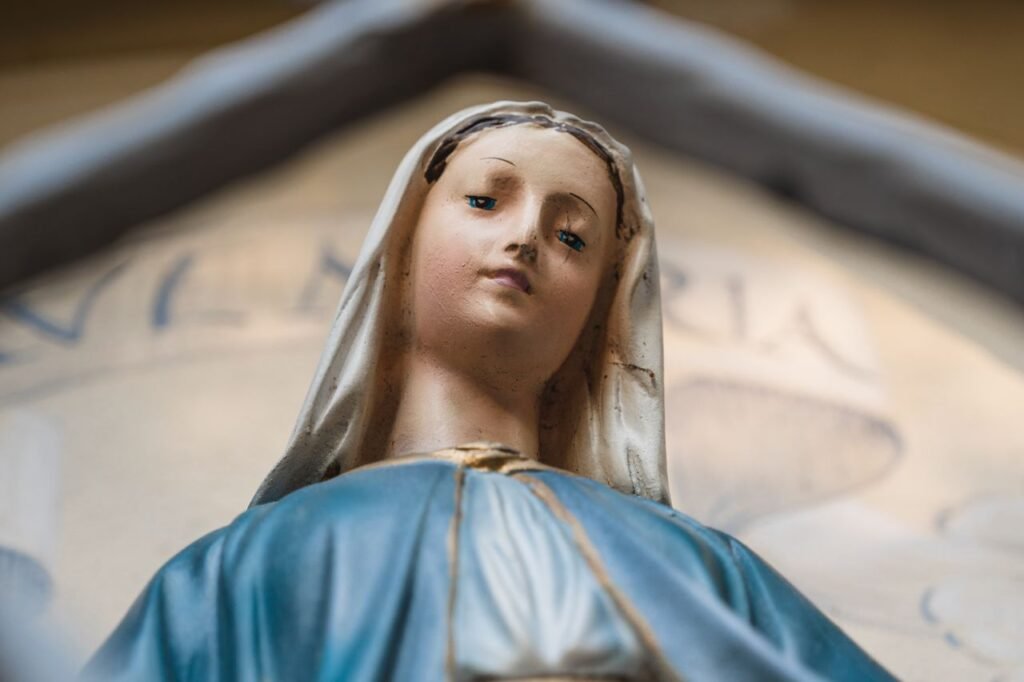
Mary, the mother of Jesus, holds a special place in the biblical story. She was the young woman chosen to give birth to Jesus Christ, the Savior Christians believe God sent into the world. Her story reveals faith, humility, courage, obedience, and trust in God’s promises.
From the angel Gabriel’s announcement in Nazareth to Mary’s presence at the cross, the Bible records several important moments in her life. Some details are well known, while others are often overlooked.
But how much does the Bible actually tell us about Mary?
In this article, you will discover 50 facts about Mary, the mother of Jesus, with Bible verses to help you understand her life, family, faith, and role in the story of Jesus.
Whether you are studying the Bible, preparing for Christmas, researching biblical women, or looking for meaningful Scripture lessons, these facts will help you explore Mary’s story more deeply.
50 Facts About Mary, the Mother of Jesus
1. Mary Was the Mother of Jesus
Bible Reference: Matthew 1:18; Luke 2:6–7
Mary was the woman who gave birth to Jesus Christ. The Gospels of Matthew and Luke describe the circumstances surrounding His birth and Mary’s role in God’s plan. Her story is central to the Christian understanding of the incarnation, the belief that God the Son took on human nature.
2. Mary Lived in Nazareth
Bible Reference: Luke 1:26–27
Mary lived in Nazareth, a town in Galilee. The angel Gabriel was sent there to announce that she would conceive and give birth to Jesus. Nazareth became closely associated with Jesus’ early life because He grew up there with Mary and Joseph.
3. Mary Was Engaged to Joseph
Bible Reference: Matthew 1:18; Luke 1:27
When the angel Gabriel visited Mary, she was pledged to be married to Joseph. Matthew explains that Mary became pregnant through the Holy Spirit before she and Joseph came together as husband and wife.
4. The Angel Gabriel Appeared to Mary
Bible Reference: Luke 1:26–28
God sent the angel Gabriel to Mary with an extraordinary message. Gabriel greeted her as one who had found favor with God and told her that the Lord was with her. His announcement marked the beginning of the biblical account of Jesus’ conception.
5. Mary Was Chosen to Give Birth to Jesus
Bible Reference: Luke 1:30–31
Gabriel told Mary that she had found favor with God and would conceive a son. She was instructed to name Him Jesus. According to Luke, this child would be great and would be called the Son of the Most High.
6. Mary Was Troubled by the Angel’s Greeting
Bible Reference: Luke 1:29
When Mary heard Gabriel’s greeting, she was troubled and wondered what it meant. Her reaction shows that she did not immediately understand the significance of the angel’s words.
7. Mary Asked How She Could Have a Child
Bible Reference: Luke 1:34
Mary asked Gabriel how she could conceive a child since she had not known a man. Her question led to the angel’s explanation that the Holy Spirit would come upon her and the power of the Most High would overshadow her.
8. Mary Conceived Jesus Through the Holy Spirit
Bible Reference: Matthew 1:18; Luke 1:35
The Gospels teach that Jesus’ conception was a miraculous act of God. Matthew says Mary was found to be pregnant through the Holy Spirit, and Luke records Gabriel’s explanation of how this would happen.
This is the biblical foundation of the Christian doctrine of the virgin birth.
9. Mary Was Told That Jesus Would Be Called the Son of God
Bible Reference: Luke 1:35
Gabriel explained that the Holy Spirit would come upon Mary and that her child would be called holy, the Son of God. This announcement reveals the unique identity attributed to Jesus in Luke’s Gospel.
10. Mary Was Told That Jesus Would Reign Forever
Bible Reference: Luke 1:32–33
Gabriel told Mary that God would give Jesus the throne of His ancestor David. He would reign over the house of Jacob forever, and His kingdom would have no end.
This announcement connects Jesus with God’s promises concerning David’s royal line.
11. Mary Responded With Faith
Bible Reference: Luke 1:38
Mary answered Gabriel by saying that she was the Lord’s servant and asking that God’s word be fulfilled in her. Her response is often remembered as an example of faith and willingness to follow God’s will.
12. Mary Visited Elizabeth
Bible Reference: Luke 1:39–40
After the angel’s announcement, Mary traveled to a town in the hill country of Judea to visit her relative Elizabeth. Elizabeth was also expecting a child, who would later become John the Baptist.
Their meeting is one of the most memorable encounters in the opening chapters of Luke.
13. Elizabeth Called Mary Blessed
Bible Reference: Luke 1:42–45
When Mary greeted Elizabeth, Elizabeth was filled with the Holy Spirit and called her blessed among women. She also praised Mary for believing that God’s promises would be fulfilled.
Elizabeth’s words emphasize Mary’s faith and the significance of the child she was carrying.
14. John the Baptist Leaped in Elizabeth’s Womb
Bible Reference: Luke 1:41–44
When Elizabeth heard Mary’s greeting, the baby in her womb leaped. Elizabeth interpreted this movement as a joyful response to Mary’s arrival. The event highlights the connection between the births of Jesus and John the Baptist in Luke’s account.
15. Mary Sang a Song of Praise to God
Bible Reference: Luke 1:46–55
Mary responded to Elizabeth with a song of praise traditionally called the Magnificat. She glorified God for His greatness, mercy, and faithfulness. Her song also celebrates how God lifts up the humble and remembers His promises to His people.
16. Mary Called God Her Savior
Bible Reference: Luke 1:47
In the Magnificat, Mary declares that her spirit rejoices in God her Savior. This verse is an important part of her song and expresses her personal praise and dependence on God.
17. Mary Recognized God’s Mercy
Bible Reference: Luke 1:50
Mary’s song describes God’s mercy as extending from generation to generation to those who fear Him. Her words connect her personal experience with God’s enduring faithfulness toward His people.
18. Mary Remembered God’s Promise to Abraham
Bible Reference: Luke 1:54–55
Mary concluded her song by remembering God’s mercy toward Israel and His promise to Abraham and his descendants. Her words show that she understood Jesus’ coming within the larger story of God’s covenant promises.
19. Mary Returned Home After Visiting Elizabeth
Bible Reference: Luke 1:56
Mary stayed with Elizabeth for about three months before returning to her home. Luke records this detail after the account of Mary’s visit and her song of praise.
20. Joseph Considered Ending Their Engagement
Bible Reference: Matthew 1:18–19
When Joseph discovered that Mary was pregnant, he faced a difficult decision. Matthew describes him as righteous and says he did not want to expose her to public disgrace. He initially planned to divorce her quietly.
21. An Angel Reassured Joseph About Mary
Bible Reference: Matthew 1:20–21
An angel appeared to Joseph in a dream and explained that Mary’s child had been conceived through the Holy Spirit. The angel instructed Joseph to take Mary as his wife and name the child Jesus.
22. Joseph Took Mary as His Wife
Bible Reference: Matthew 1:24–25
Joseph obeyed the angel’s instructions and took Mary as his wife. Matthew also explains that Joseph did not have marital relations with her before she gave birth to Jesus.
23. Mary Traveled to Bethlehem With Joseph
Bible Reference: Luke 2:1–5
Mary accompanied Joseph from Nazareth to Bethlehem because of the census ordered by Caesar Augustus. Luke notes that Mary was expecting a child during the journey.
24. Mary Gave Birth to Jesus in Bethlehem
Bible Reference: Luke 2:6–7
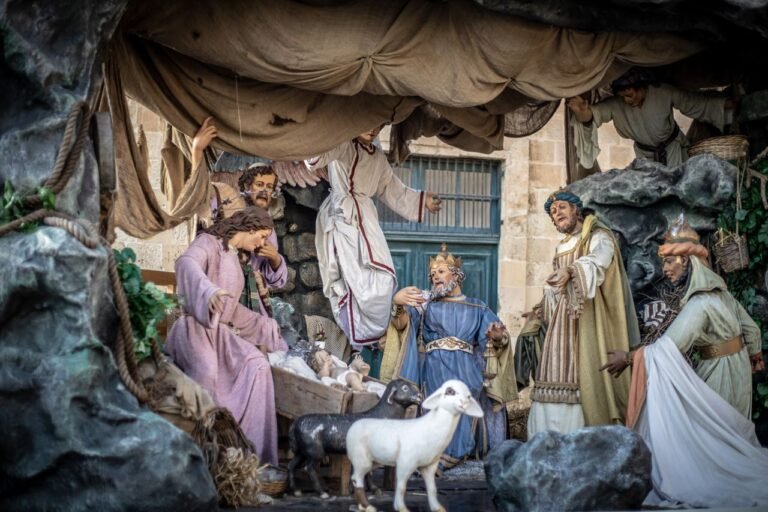
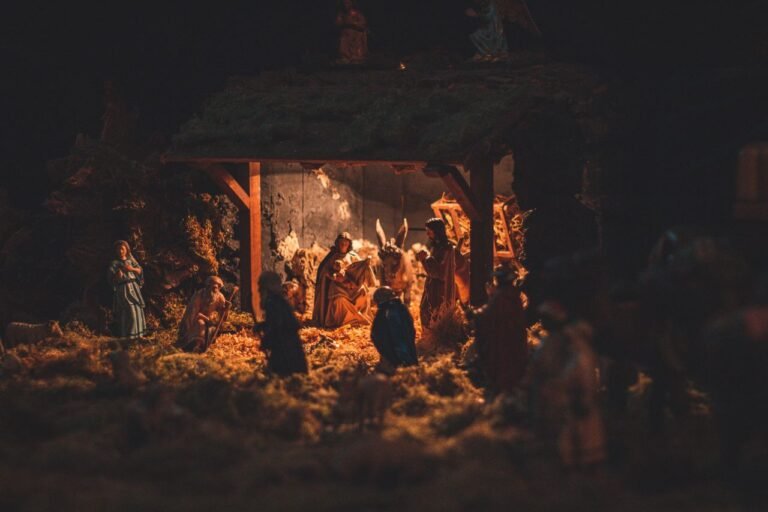
While Mary and Joseph were in Bethlehem, the time came for her to give birth. She delivered her firstborn son, wrapped Him in cloths, and laid Him in a manger because there was no place available for them in the guest accommodation.
25. Mary Laid Jesus in a Manger
Bible Reference: Luke 2:7
After Jesus was born, Mary laid Him in a manger. A manger was a feeding trough for animals. Although the Bible does not explicitly identify the building as a stable, this humble setting has become one of the most familiar images of the Christmas story.
26. Mary Heard the Shepherds Share the Angels’ Message
Bible Reference: Luke 2:15–18
After angels announced Jesus’ birth, shepherds traveled to Bethlehem and found the child. They then shared what they had heard about Him, and those who listened were amazed.
Mary was present with Jesus during this period, as Luke records immediately afterward.
27. Mary Treasured These Events in Her Heart
Bible Reference: Luke 2:19
Luke says Mary treasured the events surrounding Jesus’ birth and pondered them in her heart. Her response suggests thoughtful reflection on the extraordinary things happening in her life.
28. Mary Took Jesus to Be Presented at the Temple
Bible Reference: Luke 2:22–24
Mary and Joseph brought Jesus to Jerusalem to present Him to the Lord in accordance with the Law of Moses. They offered a pair of doves or two young pigeons, an offering permitted for families who could not afford a lamb.
29. Mary Heard Simeon’s Prophecy About Jesus
Bible Reference: Luke 2:25–35
At the temple, Simeon recognized Jesus as God’s promised salvation. He blessed the family and told Mary that a sword would pierce her own soul, revealing that her journey as Jesus’ mother would include deep sorrow.
30. Mary and Joseph Were Amazed by Simeon’s Words
Bible Reference: Luke 2:33
Luke says Jesus’ father and mother marveled at what Simeon said about Him. The passage records their reaction as they listened to the prophetic words concerning Jesus.
31. Mary Met the Prophetess Anna at the Temple
Bible Reference: Luke 2:36–38
Anna, an elderly prophetess who worshiped at the temple, gave thanks to God when she saw Jesus. She spoke about the child to those who were waiting for the redemption of Jerusalem.
Although Luke does not record a direct conversation between Anna and Mary, their stories are connected through the presentation of Jesus.
32. Mary and Joseph Received the Wise Men
Bible Reference: Matthew 2:11
Matthew records that wise men from the East entered a house and saw Jesus with His mother Mary. They bowed down and worshiped Him before presenting gifts of gold, frankincense, and myrrh.
The Bible does not say there were exactly three wise men, nor does it explicitly say Mary spoke with them.
33. Mary Traveled to Egypt With Jesus
Bible Reference: Matthew 2:13–15
After the wise men departed, an angel warned Joseph in a dream that Herod wanted to harm Jesus. Joseph took the child and His mother to Egypt, where they remained until Herod’s death.
Mary’s journey shows that Jesus’ early childhood included danger and displacement.
34. Mary Returned to Israel With Joseph and Jesus
Bible Reference: Matthew 2:19–21
After Herod died, an angel instructed Joseph to return to the land of Israel. Joseph took Jesus and Mary back from Egypt in obedience to the message he had received.
35. Mary Raised Jesus in Nazareth
Bible Reference: Luke 2:39–40; Matthew 2:22–23
After the family’s return, Joseph settled in Nazareth in Galilee. Jesus grew and became strong, filled with wisdom, and God’s favor was upon Him. Mary was part of the family setting in which Jesus spent His early years.
36. Mary and Joseph Traveled to Jerusalem Every Year for Passover
Bible Reference: Luke 2:41
Luke records that Jesus’ parents went to Jerusalem every year for the Passover festival. This detail gives insight into their religious practices and family traditions.
37. Mary and Joseph Once Lost Track of Jesus
Bible Reference: Luke 2:42–45
When Jesus was twelve years old, His family traveled to Jerusalem for Passover. As they began returning home, Mary and Joseph assumed Jesus was among their traveling companions. When they realized He was missing, they returned to Jerusalem to search for Him.
38. Mary Found Jesus in the Temple
Bible Reference: Luke 2:46–48
After three days, Mary and Joseph found Jesus in the temple, sitting among the teachers, listening to them and asking questions. Mary expressed her distress and asked why He had treated them this way.
This account offers a rare glimpse into Mary’s experience of raising Jesus.
39. Mary Asked Jesus Why He Had Stayed Behind
Bible Reference: Luke 2:48
Mary asked Jesus why He had caused His parents such anxiety. Jesus replied that He had to be in His Father’s house, or about His Father’s business, depending on the Bible translation.
His response reveals the importance of His relationship with His heavenly Father.
40. Mary Did Not Fully Understand Jesus’ Response
Bible Reference: Luke 2:50
Luke says Mary and Joseph did not understand what Jesus meant when He spoke about His Father’s house or business. This reminds readers that Mary, despite her unique role, did not always immediately understand everything about Jesus’ mission.
41. Mary Kept These Things in Her Heart
Bible Reference: Luke 2:51
After Jesus returned to Nazareth with His parents, Luke says Mary treasured all these things in her heart. This echoes the earlier description of her reflection after Jesus’ birth.
42. Mary Was Present at the Wedding in Cana
Bible Reference: John 2:1–3
Mary attended a wedding in Cana of Galilee where Jesus and His disciples were also present. When the wine ran out, Mary brought the situation to Jesus’ attention.
This event begins the account of Jesus’ first sign in John’s Gospel.
43. Mary Asked Jesus About the Lack of Wine
Bible Reference: John 2:3
Mary told Jesus that the wedding hosts had no wine. Jesus responded that His hour had not yet come. Mary then instructed the servants to do whatever Jesus told them.
44. Mary Witnessed Jesus Turn Water Into Wine
Bible Reference: John 2:6–11
At Cana, Jesus instructed the servants to fill six stone water jars with water. The water became wine, and John describes this as the beginning of Jesus’ signs, through which He revealed His glory. The passage records Mary’s presence at the wedding but does not describe her witnessing every step of the miracle.
45. Mary Was Present During Jesus’ Public Ministry
Bible Reference: Matthew 12:46–50; Mark 3:31–35
The Gospels mention Jesus’ mother and brothers seeking to speak with Him during His ministry. Jesus used the occasion to teach that those who do the will of His heavenly Father are His brother, sister, and mother.
These passages show that Mary’s family continued to appear in the narrative after Jesus began His public work.
46. Mary Was Present Near the Cross
Bible Reference: John 19:25
John records that Jesus’ mother stood near the cross along with other women. While the other Gospels mention women watching from a distance, John’s account specifically identifies Jesus’ mother as being present near Him during His crucifixion.
47. Jesus Entrusted Mary to the Care of the Beloved Disciple
Bible Reference: John 19:26–27
As Jesus was dying on the cross, He saw His mother and the disciple whom He loved standing nearby. He told Mary to regard the disciple as her son and told the disciple to take Mary as his mother.
John says that the disciple took her into his own home from that hour.
48. Mary Was Among the Followers of Jesus After His Ascension
Bible Reference: Acts 1:12–14
After Jesus ascended into heaven, the apostles returned to Jerusalem. Acts records that they gathered in an upper room and devoted themselves to prayer along with several women, Mary the mother of Jesus, and His brothers.
This is the last explicit biblical mention of Mary by name.
49. The Bible Does Not Record Mary’s Death
Bible Reference: Acts 1:14
The New Testament does not provide an account of Mary’s death or describe the circumstances of her final years. Different Christian traditions hold additional beliefs about her later life, but these details are not narrated in the canonical biblical text.
50. Mary Is Remembered for Her Faith and Obedience
Bible Reference: Luke 1:38, 45–49
Mary’s story includes her willingness to accept God’s plan, her song of praise, her care for Jesus, and her presence during important moments of His life. Luke records Elizabeth praising Mary for believing that God’s promises would be fulfilled.
Her words and actions continue to make her an important biblical example of faith, humility, and trust in God.
What Can We Learn From Mary, the Mother of Jesus?
Mary’s story offers several lessons for Christians today. Her life was not free from uncertainty, hardship, or sorrow, but the biblical accounts show her responding to God with faith.
1. Trust God Even When the Future Is Uncertain
Mary did not know everything that would happen after Gabriel’s announcement. Nevertheless, she accepted God’s message. Her response in Luke 1:38 reminds readers that faith sometimes requires trust before all the answers are clear.
2. Humility Is an Important Part of Faith
Mary described herself as the Lord’s servant. In her song of praise, she focused on God’s greatness rather than her own importance. Her example encourages believers to remain humble and grateful.
3. Praise God for His Faithfulness
The Magnificat celebrates God’s mercy, power, and faithfulness to His promises. Mary’s song is a reminder to recognize God’s goodness and express gratitude even during uncertain times.
4. Faith Does Not Mean Understanding Everything
Mary did not immediately understand every event in Jesus’ life. Luke 2:50 records that she and Joseph did not understand His response in the temple. Her story reminds readers that questions and uncertainty can exist alongside faith.
5. Love Requires Courage and Commitment
Mary’s life involved travel, uncertainty, family responsibilities, and the sorrow of witnessing Jesus’ crucifixion. The Gospels present her as a mother who remained connected to Jesus through many important moments of His life.
Frequently Asked Questions About Mary, the Mother of Jesus
Who was Mary in the Bible?
Mary was the mother of Jesus Christ. She lived in Nazareth, was engaged to Joseph, and received an announcement from the angel Gabriel that she would give birth to Jesus. Her story appears primarily in Matthew 1–2, Luke 1–2, John 2, John 19, and Acts 1.
What are five important facts about Mary?
Five important facts about Mary are:
- She lived in Nazareth.
- She was engaged to Joseph.
- The angel Gabriel announced that she would give birth to Jesus.
- She visited Elizabeth and praised God in the Magnificat.
- She was present near Jesus’ cross, according to John’s Gospel.
These events are recorded in Luke 1, Matthew 1, and John 19.
Did Mary have other children after Jesus?
The New Testament refers to Jesus’ brothers and mentions His sisters, including passages such as Matthew 13:55–56 and Mark 6:3. Christian traditions differ in how they understand these references. Some interpret them as Jesus’ biological siblings, while others understand them as relatives or, in some traditions, children of Joseph from an earlier marriage. The passages themselves do not resolve all these later theological differences.
Was Mary present when Jesus died?
Yes. John 19:25 specifically identifies Jesus’ mother among those standing near the cross during His crucifixion. Jesus then entrusted her to the care of the beloved disciple.
Did Mary know that Jesus was the Son of God?
Luke 1:30–35 records that Gabriel told Mary her child would be called the Son of God. However, Luke 2:50 also says that Mary and Joseph did not understand Jesus’ response when they found Him in the temple. The biblical accounts therefore show that Mary received important revelations about Jesus while not necessarily understanding every aspect of His mission.
What was Mary’s song of praise called?
Mary’s song in Luke 1:46–55 is traditionally called the Magnificat. The name comes from the Latin word used at the beginning of the song in the Latin Bible. It praises God for His mercy, power, and faithfulness.
Where was Mary when Jesus was born?
Mary was in Bethlehem with Joseph when Jesus was born. Luke 2:4–7 describes their journey to Bethlehem and the birth of Jesus there.
What happened to Mary after Jesus ascended into heaven?
Acts 1:14 records that Mary joined the apostles, other women, and Jesus’ brothers in prayer after His ascension. The New Testament does not provide a detailed account of her later life or death.
Read More:
30 Christmas Bible Stories for Kids
50 Facts About the Birth of Jesus in the Bible
30 Facts About Joseph, the Earthly Father of Jesus, in the Bible